Build for the task.
Hardware, sensors, and mobility designed around the job—from confined pipes to crowded streets and extreme terrain.
ROBOTICS. IN SERVICE OF PEOPLE.
THE WORK THAT NEEDS A ROBOT
Every life at risk is someone’s whole world.
A worker entering a sewer. A soldier keeping watch in freezing darkness. A rescuer stepping into unstable rubble. Behind every dangerous task is a person with a family, a future, and a reason to come home.
We’re building robots to help make our borders safer, protect our people, and safeguard the infrastructure we all depend on. To reach places people cannot safely go. To sense warning signs earlier—so there is time to act before danger becomes tragedy.
Our environment is at stake, too. Waste is choking rivers, accumulating in forests, and spilling into the places we call home. What we leave behind becomes the world the next generation inherits. We’re building robots to help reach and recover waste in places that are dangerous or difficult to clean—protecting the water, land, and wildlife that sustain us.
For us, progress means more people coming home. More communities protected. Healthier rivers and forests. And a future worth passing on.
WHERE ROBOTICS CAN MAKE A DIFFERENCE
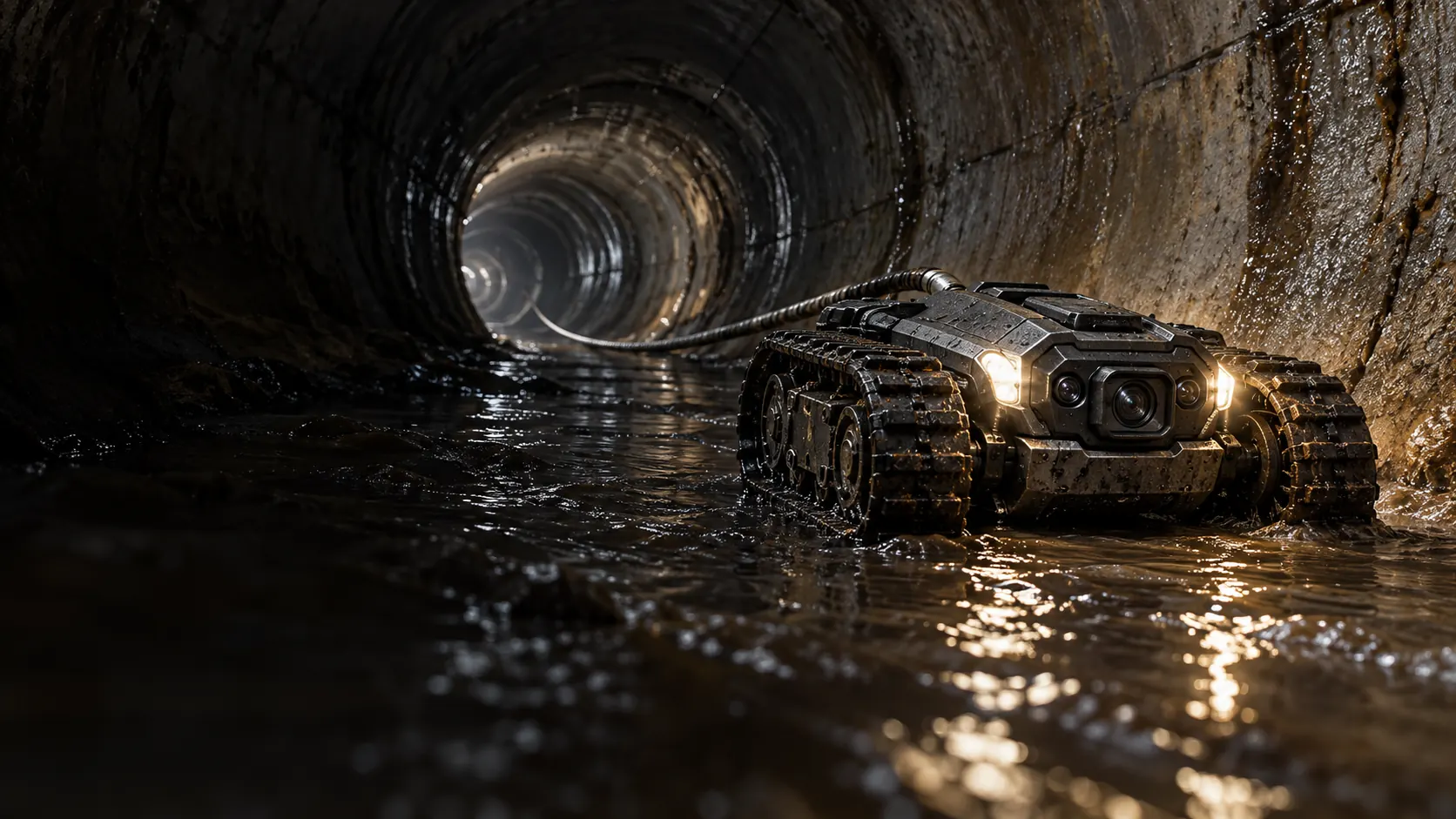
Sewage inspection
Toxic gases, low oxygen, and sudden flooding can turn a sewer deadly. Finding a fault should never mean risking a life.
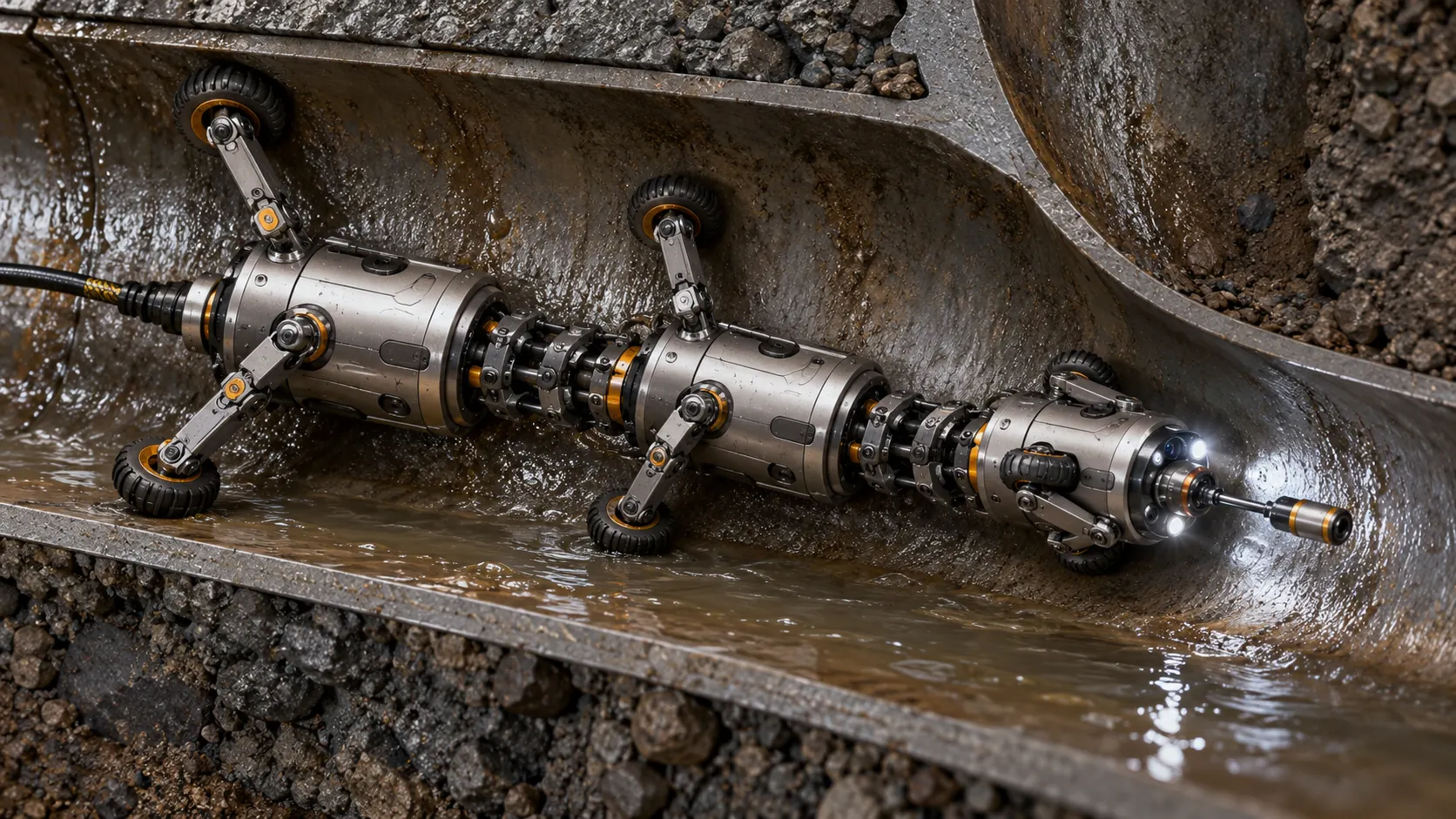
Confined-pipe access
When a pipe is too narrow to enter, reaching the damage can mean digging up roads or breaking through concrete. Access alone can become the biggest job.
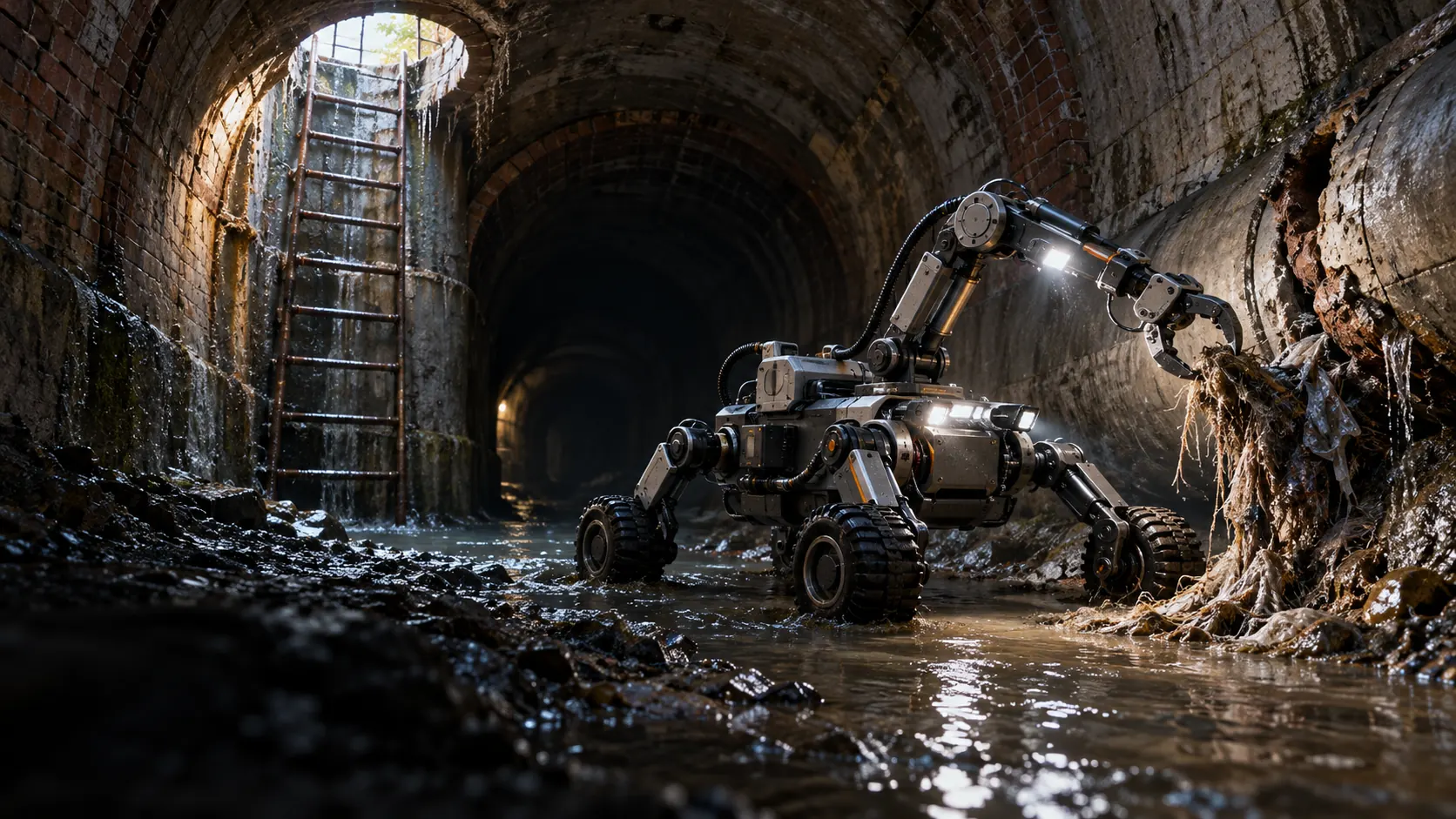
Sewer maintenance
Debris can choke a sewer and send wastewater backing up. Clearing the blockage can put workers in contaminated water, unstable footing, and confined spaces.
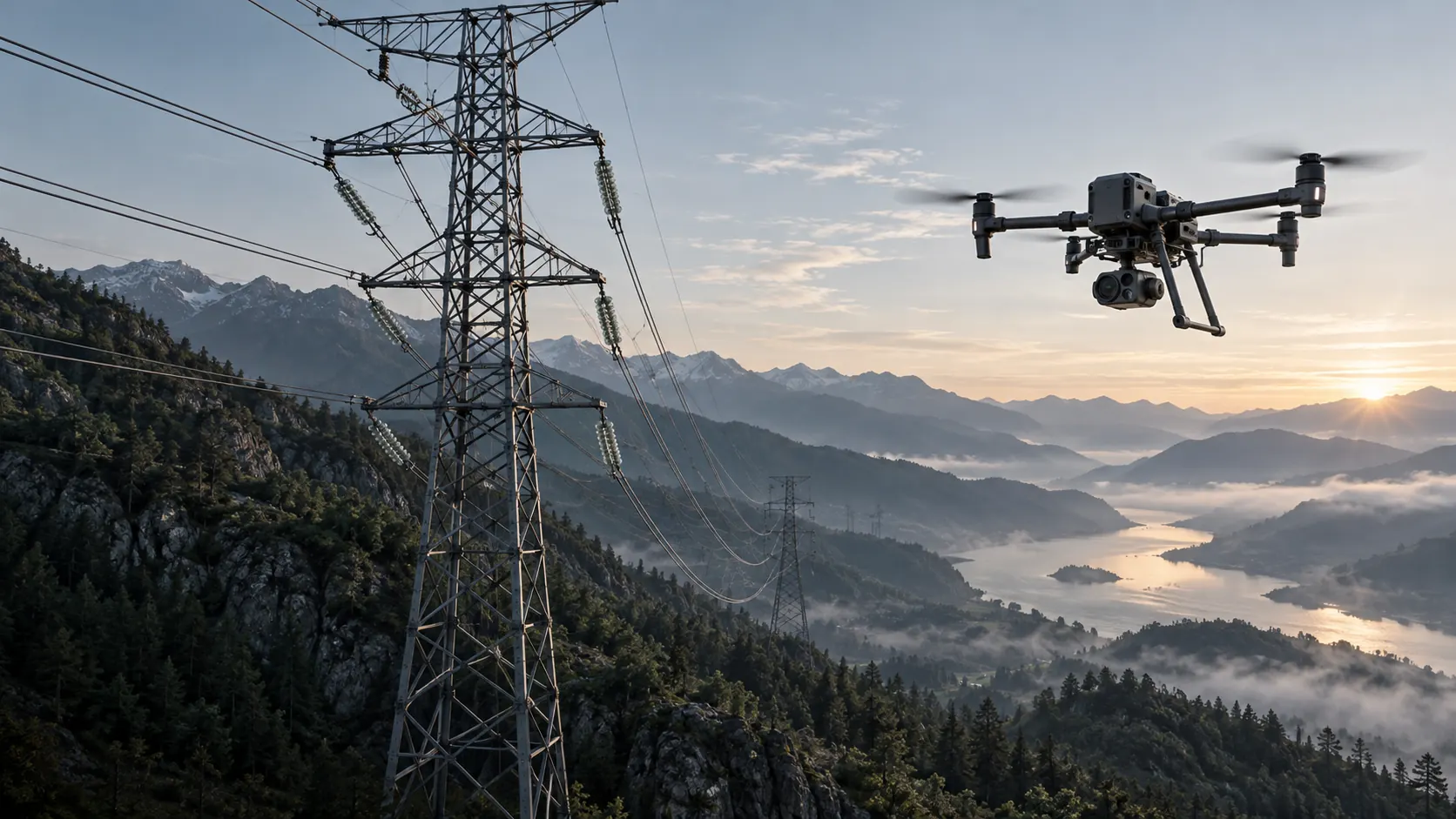
Powerline inspection
Powerlines cross steep terrain and exposed heights. Inspecting damage can put crews close to electrical hazards in places that are difficult to reach.
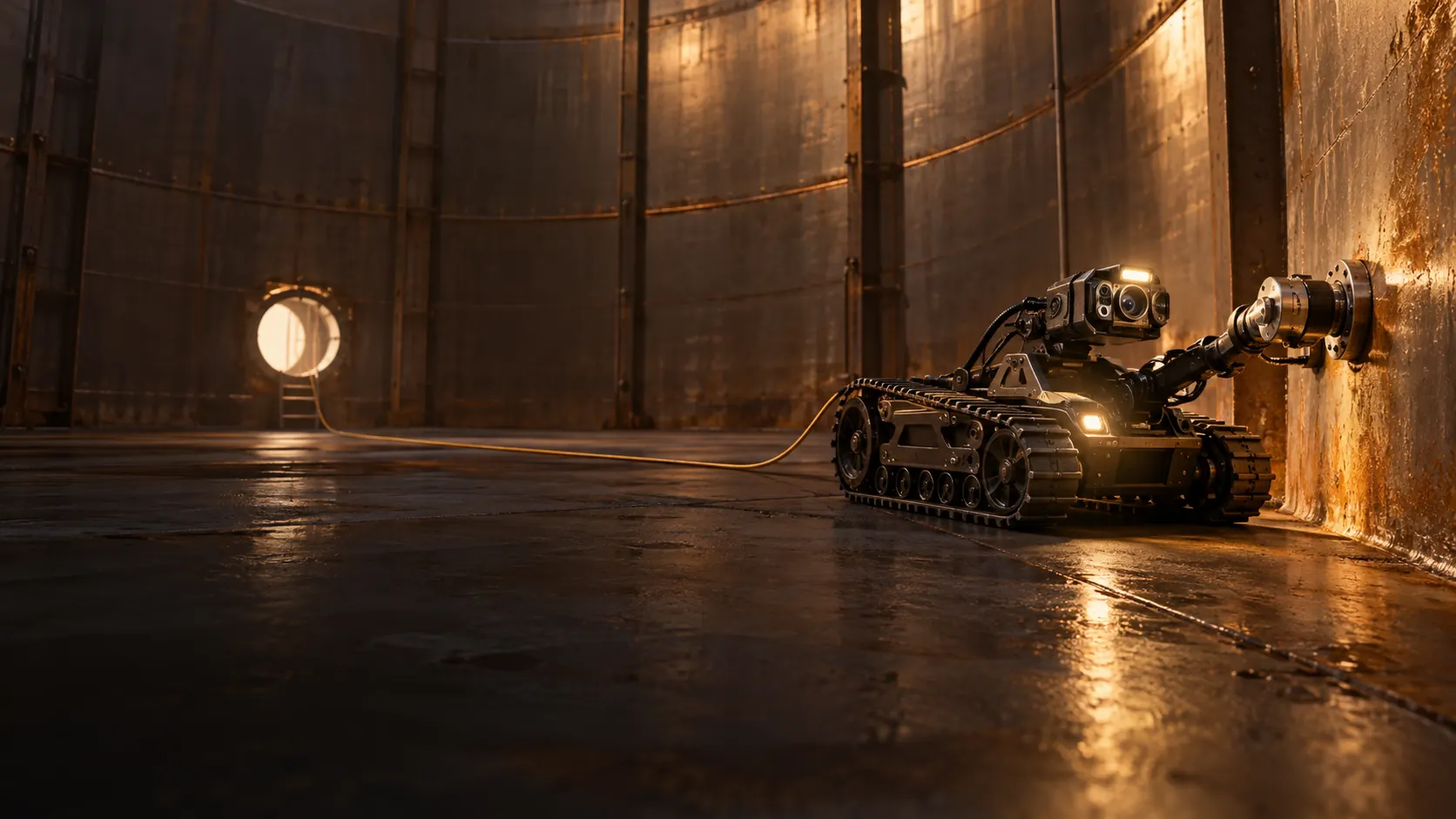
Industrial tanks & vessels
Inside a tank, toxic residues, low oxygen, and restricted exits can turn a routine inspection into a dangerous entry. Preparing safe access can be a major operation.
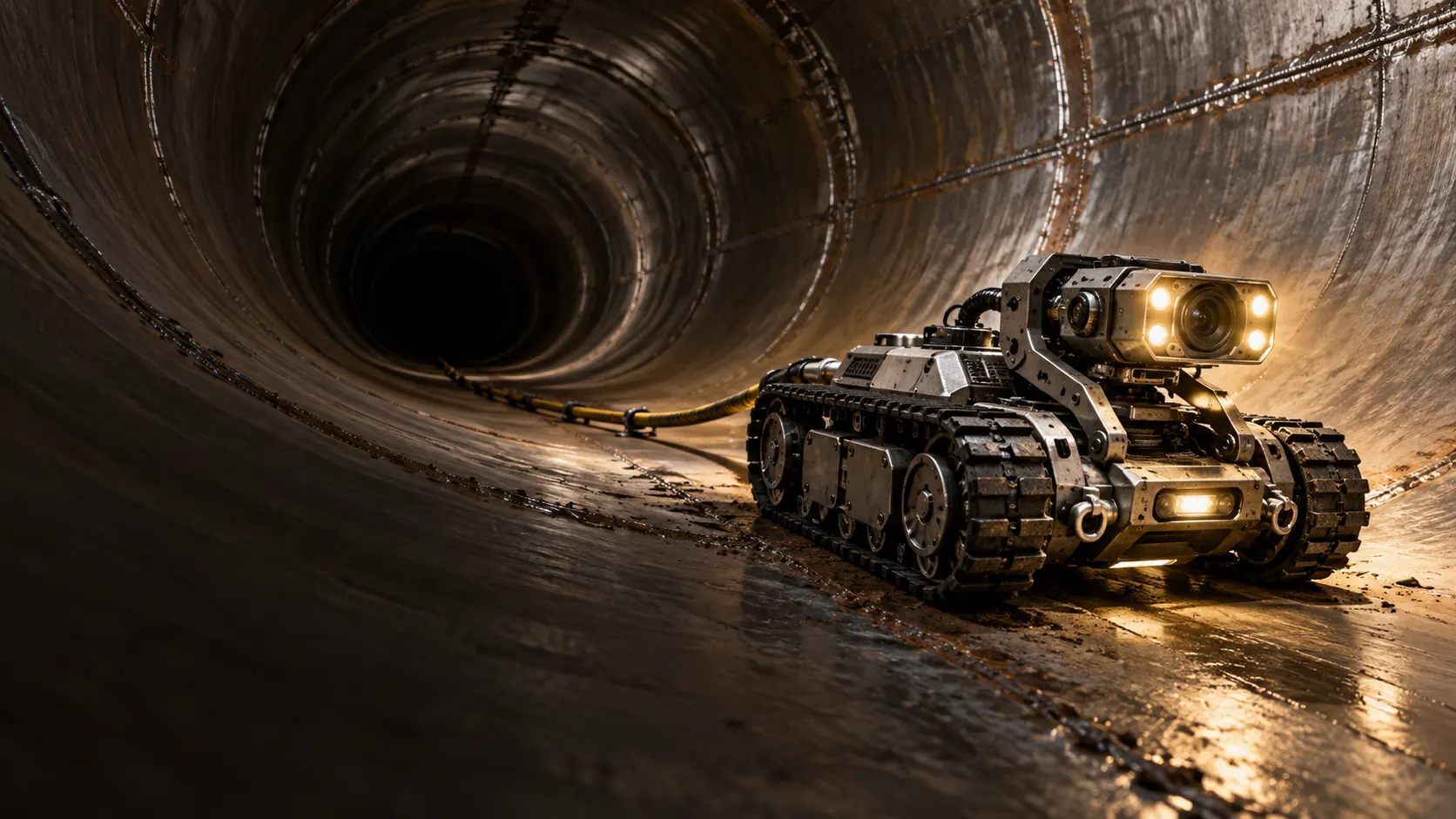
Hydropower infrastructure
Critical damage can hide deep inside penstocks and underwater intakes. Confined access and difficult water conditions make inspection a demanding operation.
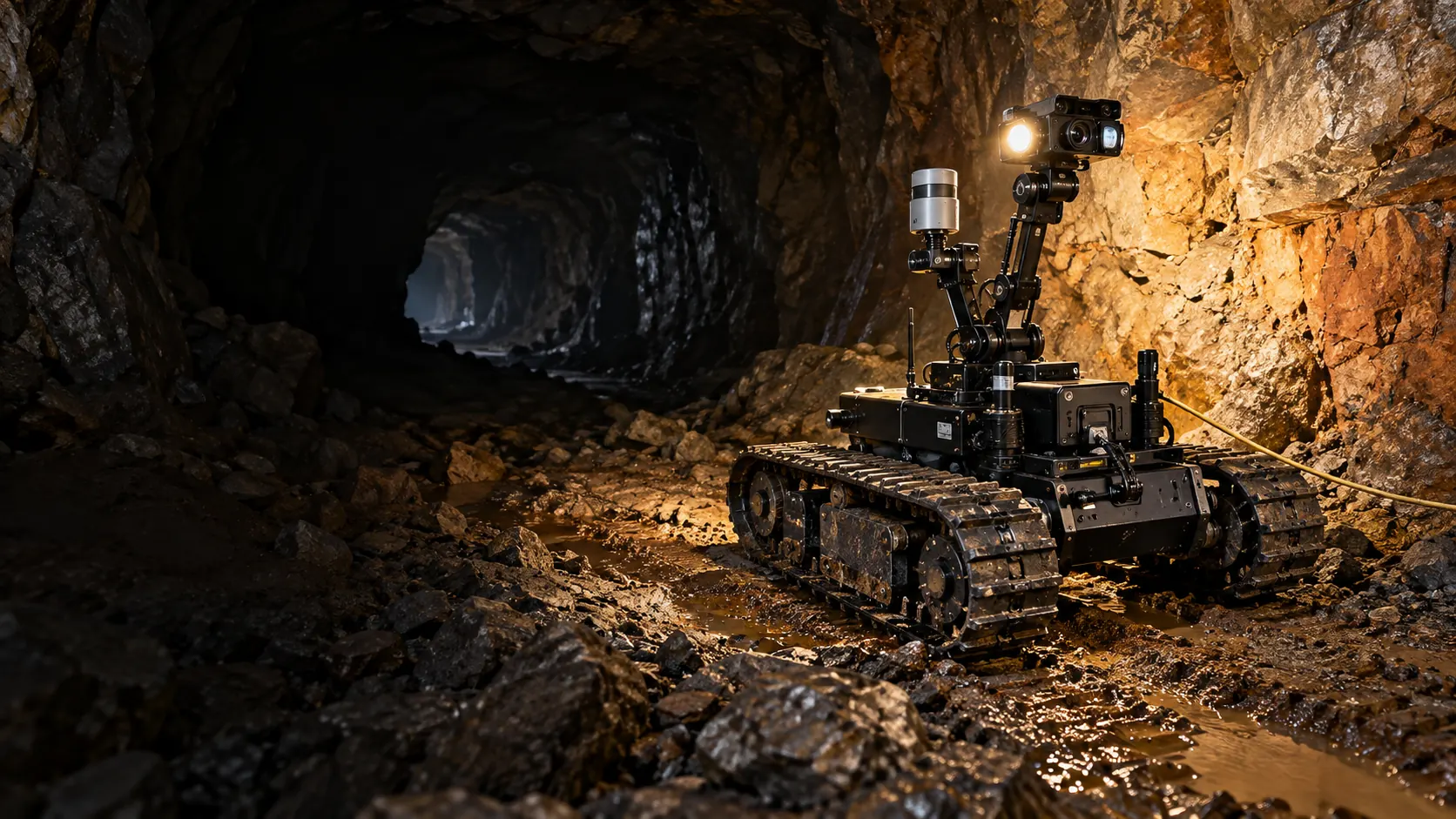
Mine reconnaissance
Unstable ground, poor visibility, and hazardous air can make an unfamiliar mine passage dangerous. Teams need to understand what lies ahead before anyone enters.
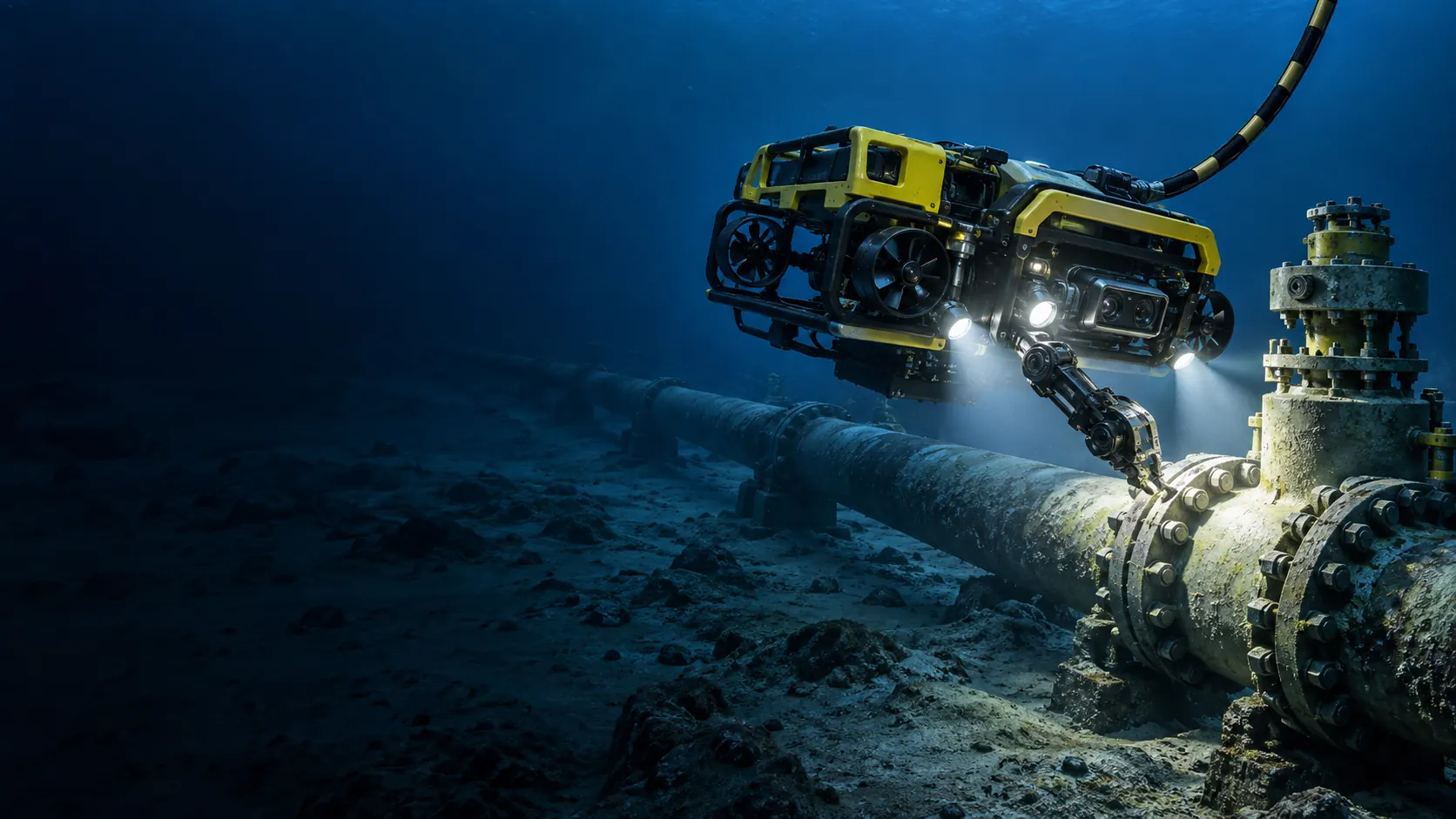
Offshore & subsea assets
Underwater infrastructure lies beyond easy reach. Depth, currents, and limited visibility make inspections difficult, while vessels and specialist crews add significant cost.
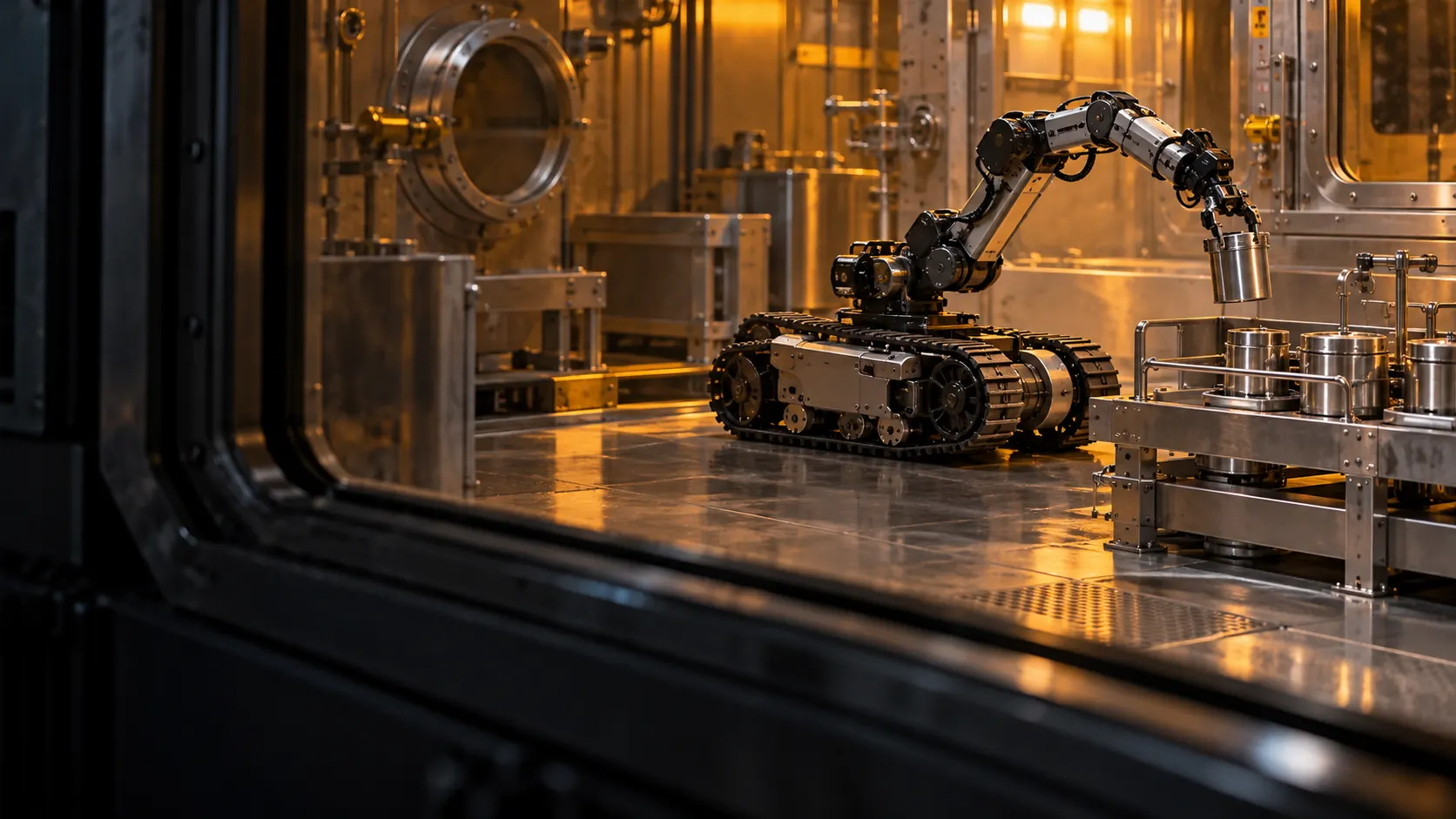
Nuclear inspection & handling
Radiation and contamination can make essential inspection and handling hazardous. Even reaching the work may demand extensive shielding, planning, and exposure controls.
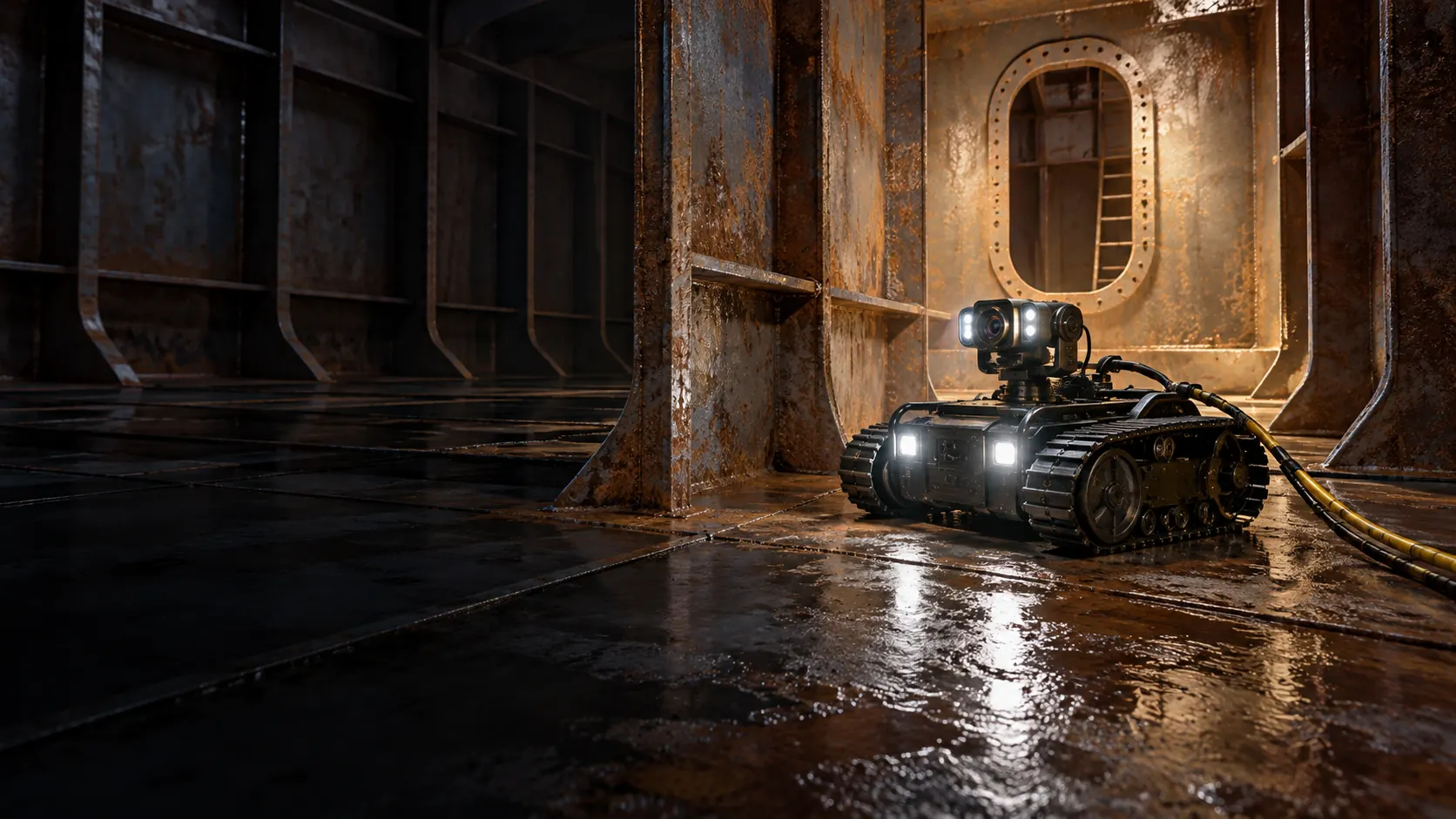
Ship ballast & cargo tanks
Corrosion can develop inside enclosed ship spaces where access is tight and the atmosphere may be hazardous. Inspecting their condition can require complex entry preparations.
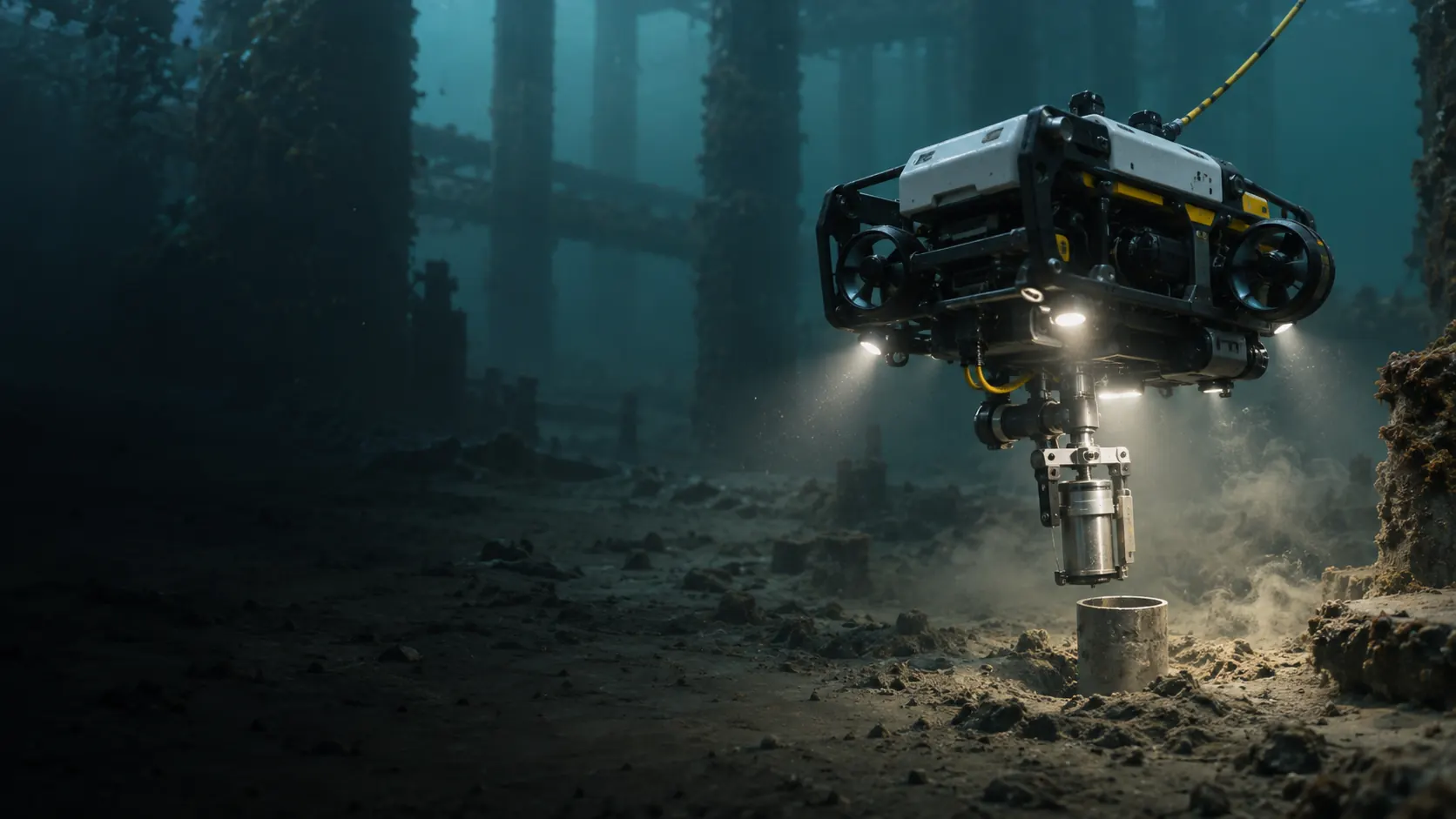
Contaminated waterways
Contamination can remain hidden in riverbed sediment. Finding its extent and planning cleanup requires work in murky water without spreading the problem further.
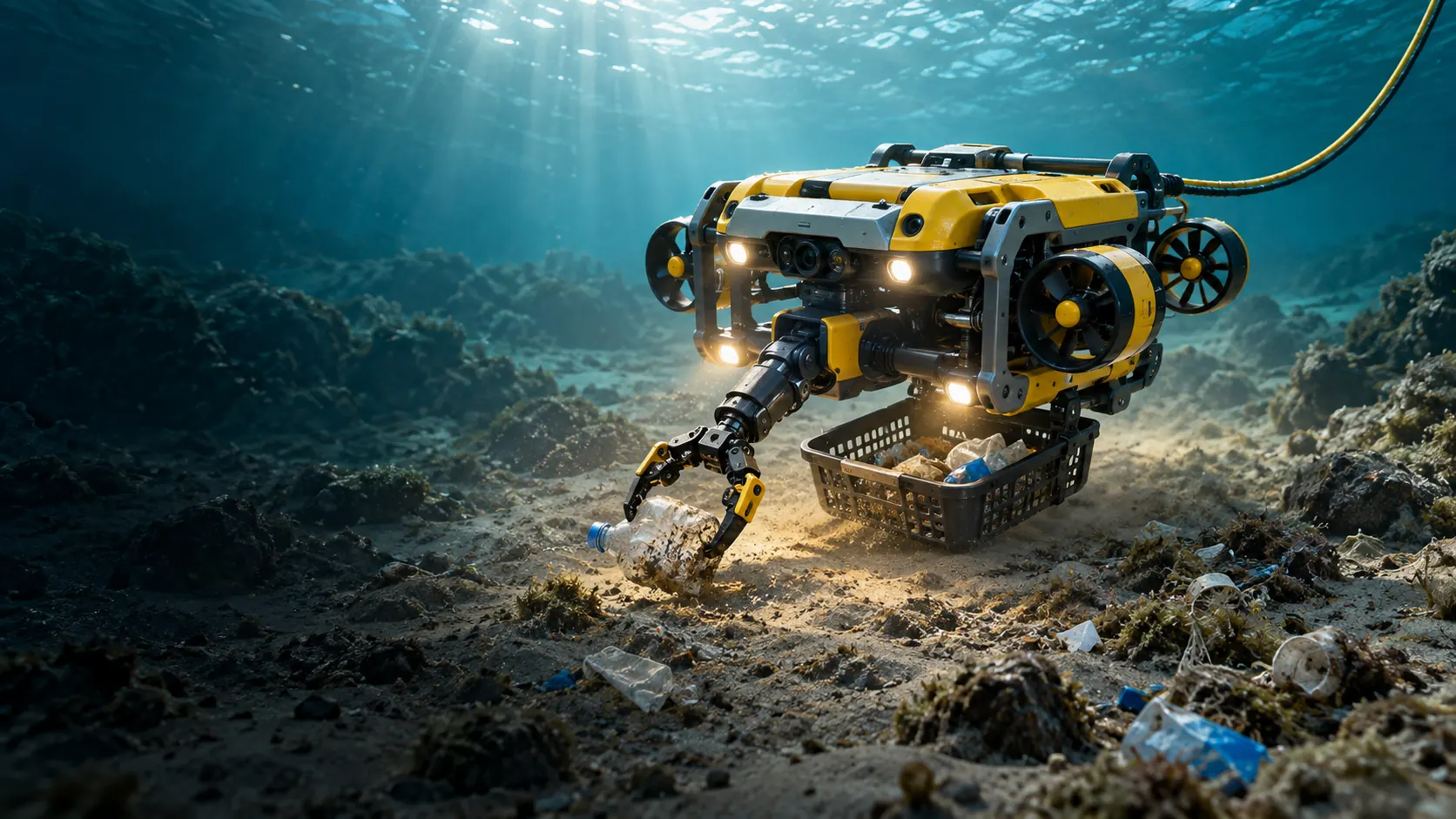
Riverbeds & oceanbeds
Submerged waste is difficult to locate and recover. Poor visibility, currents, and entanglement hazards complicate cleanup beneath the surface.
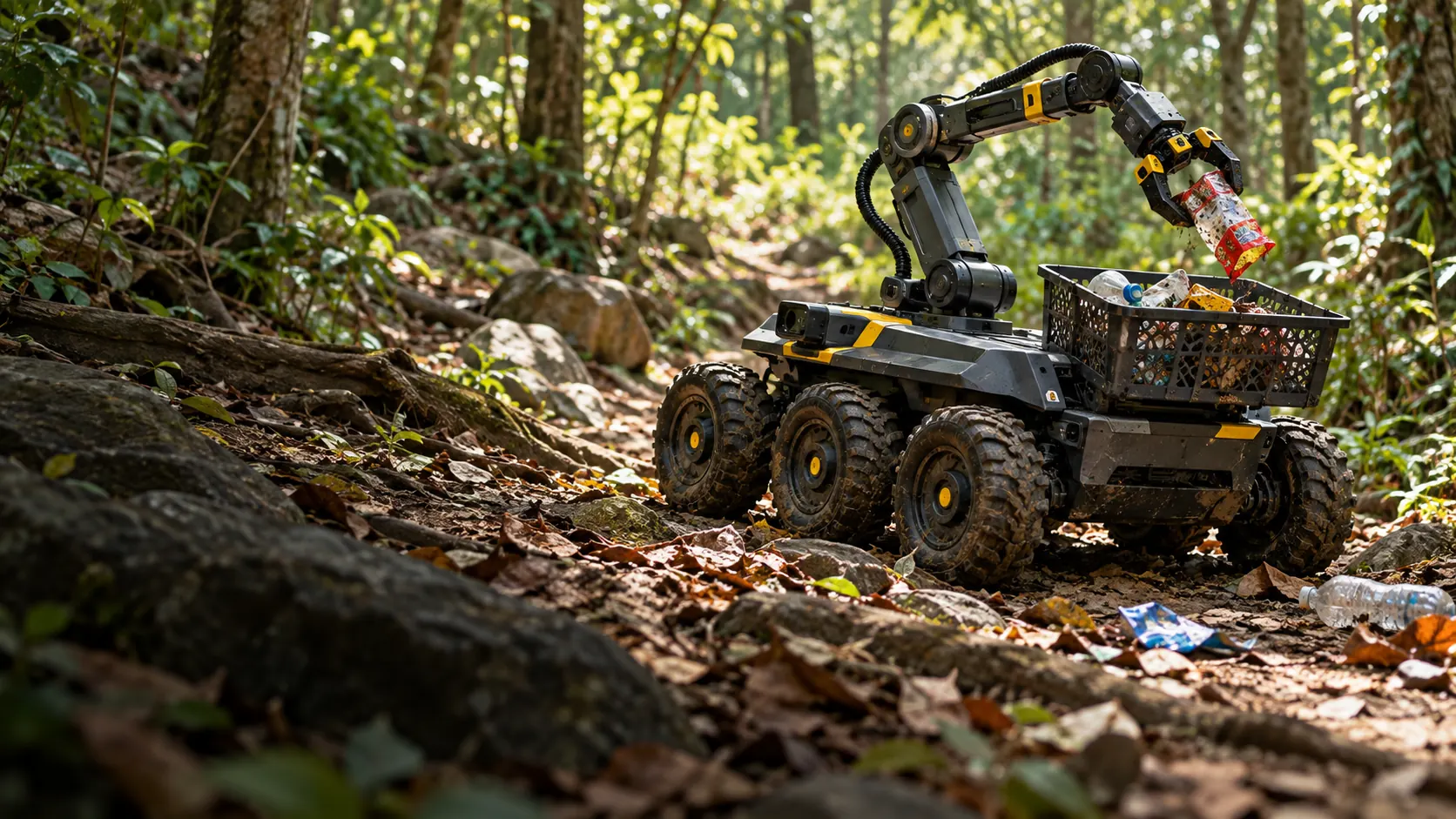
Forest cleanup
Plastic waste accumulates across dense, uneven forest terrain. Reaching scattered debris and carrying it out makes cleanup slow and physically demanding.

Extreme-cold observation
Remote mountain terrain still needs observation when extreme cold, exposure, and difficult access put people at risk.

Mountain delivery
A short distance on a map can mean a long journey in the mountains. Difficult terrain, damaged roads, and severe weather can delay essential supplies.
Disaster search & rescue
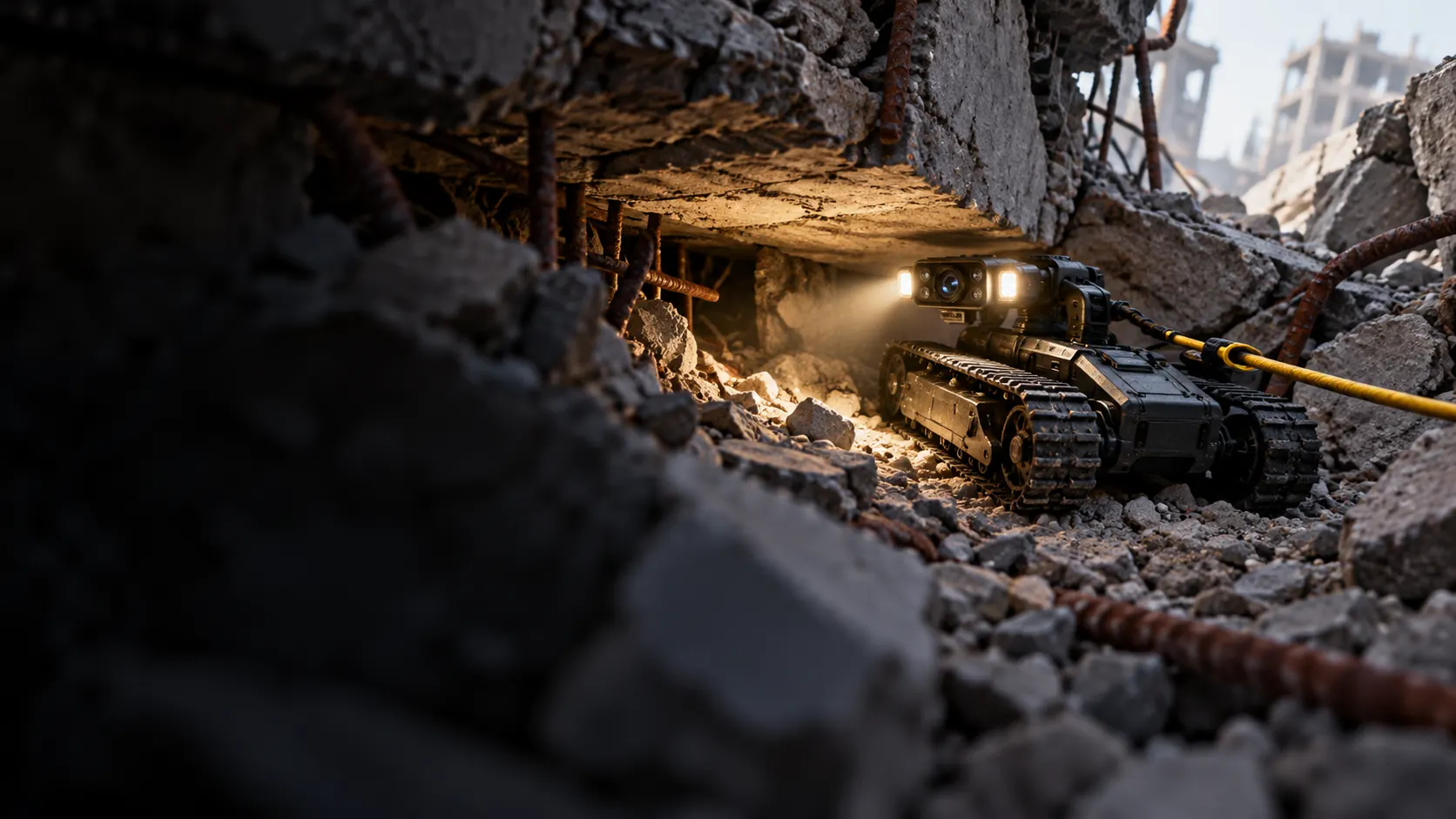
After a disaster, unstable rubble and confined voids can block access to survivors. Searching these spaces puts rescuers at risk when every minute matters.
SHARED SPACES. EVERYDAY LIFE.
Robots are needed where life happens. Streets need cleaning, infrastructure needs maintenance, and factories need support while people continue their day. Autonomous operation makes this work possible without clearing the space or directing every movement.
Many traditional robotic deployments rely on structured tasks, controlled workspaces, or separation from people. Shared public environments demand a different kind of capability: responding to people whose paths and actions are constantly changing.
At Vistree, we’re building on state-of-the-art machine-learning models and perception systems to meet that challenge—helping robots recognize people and obstacles, interpret movement, and adapt their actions as the environment changes.
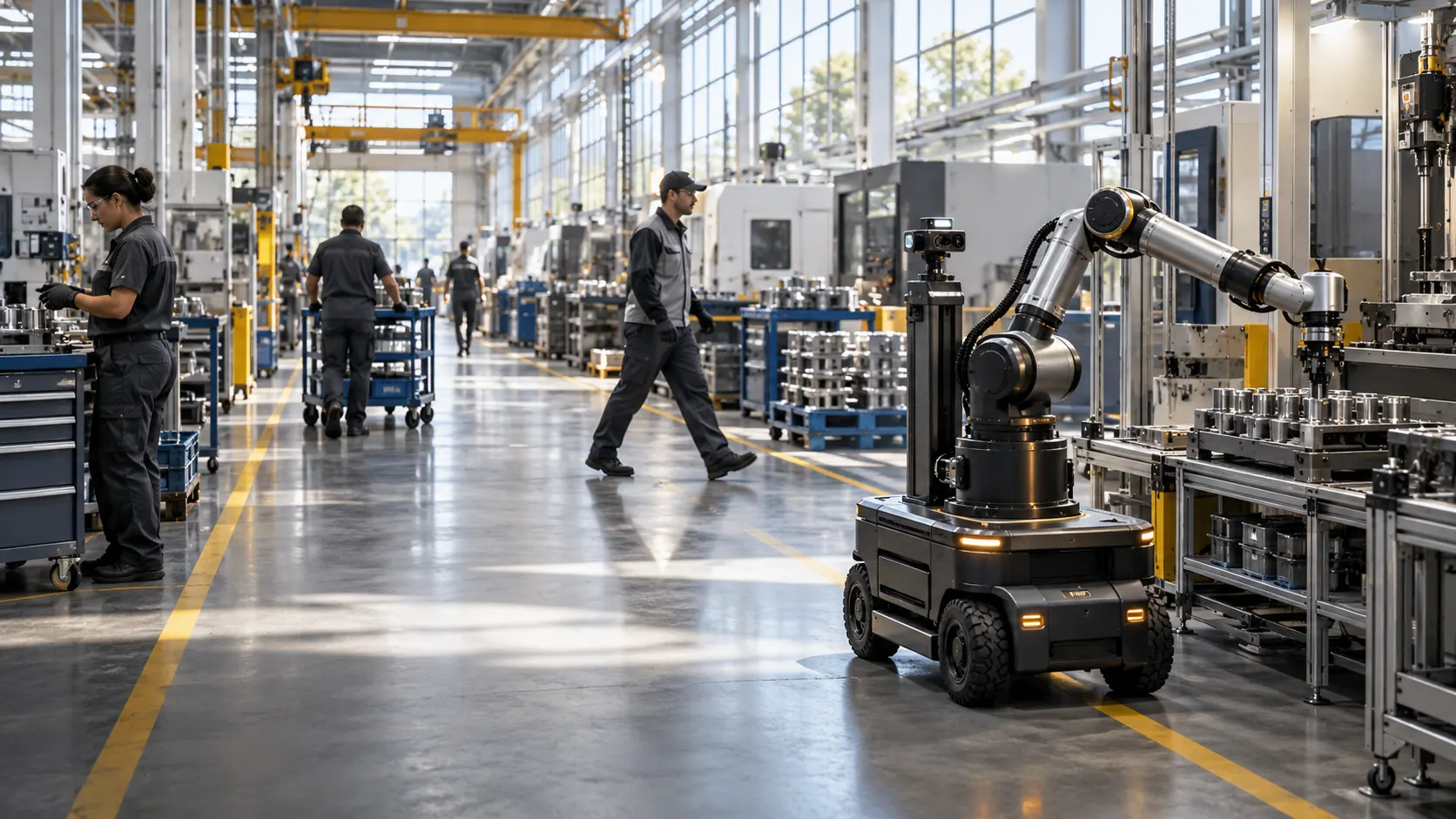
Factory floors
People cross aisles, carry materials, and move between workstations. A factory floor is a changing shared space, not a fixed route through an empty room.
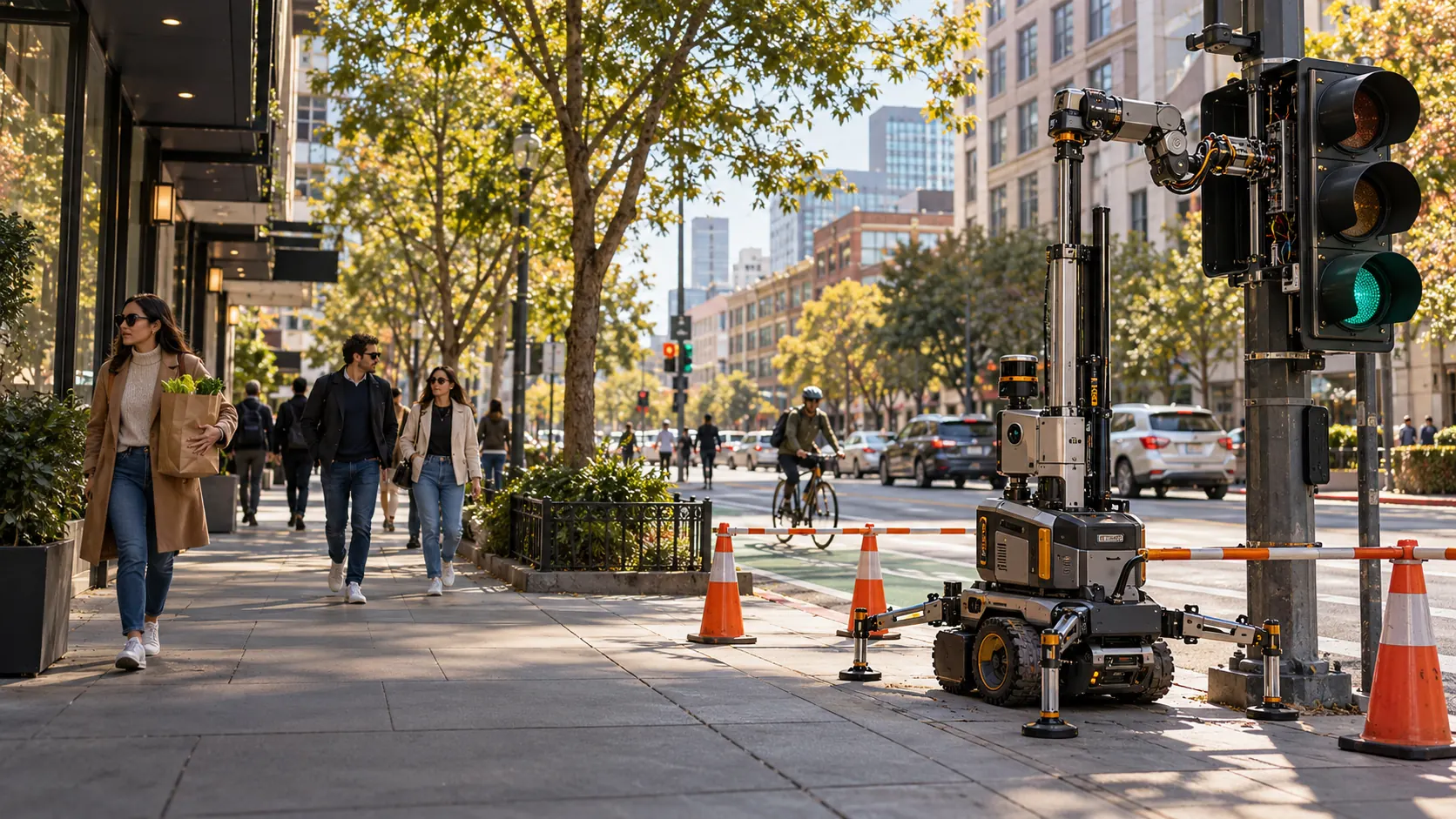
Traffic-signal maintenance
Pedestrians pass beneath street infrastructure. Cyclists approach, vehicles turn, and footpaths narrow. Essential maintenance has to coexist with everyday movement.
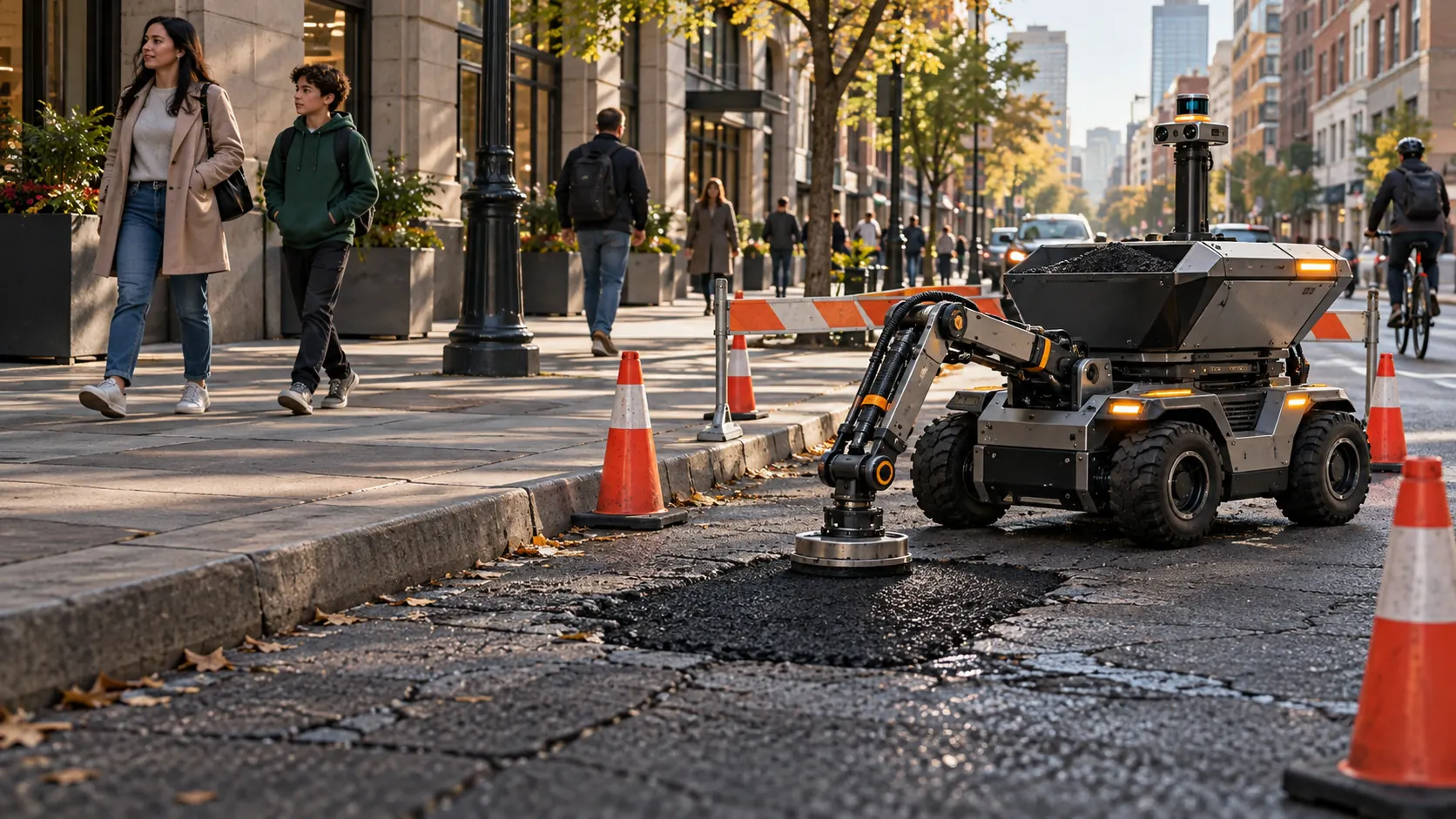
Street & pothole repairs
A pothole sits within a living street. People walk past, cross the road, and change direction. The work takes place in a public space that never truly stands still.
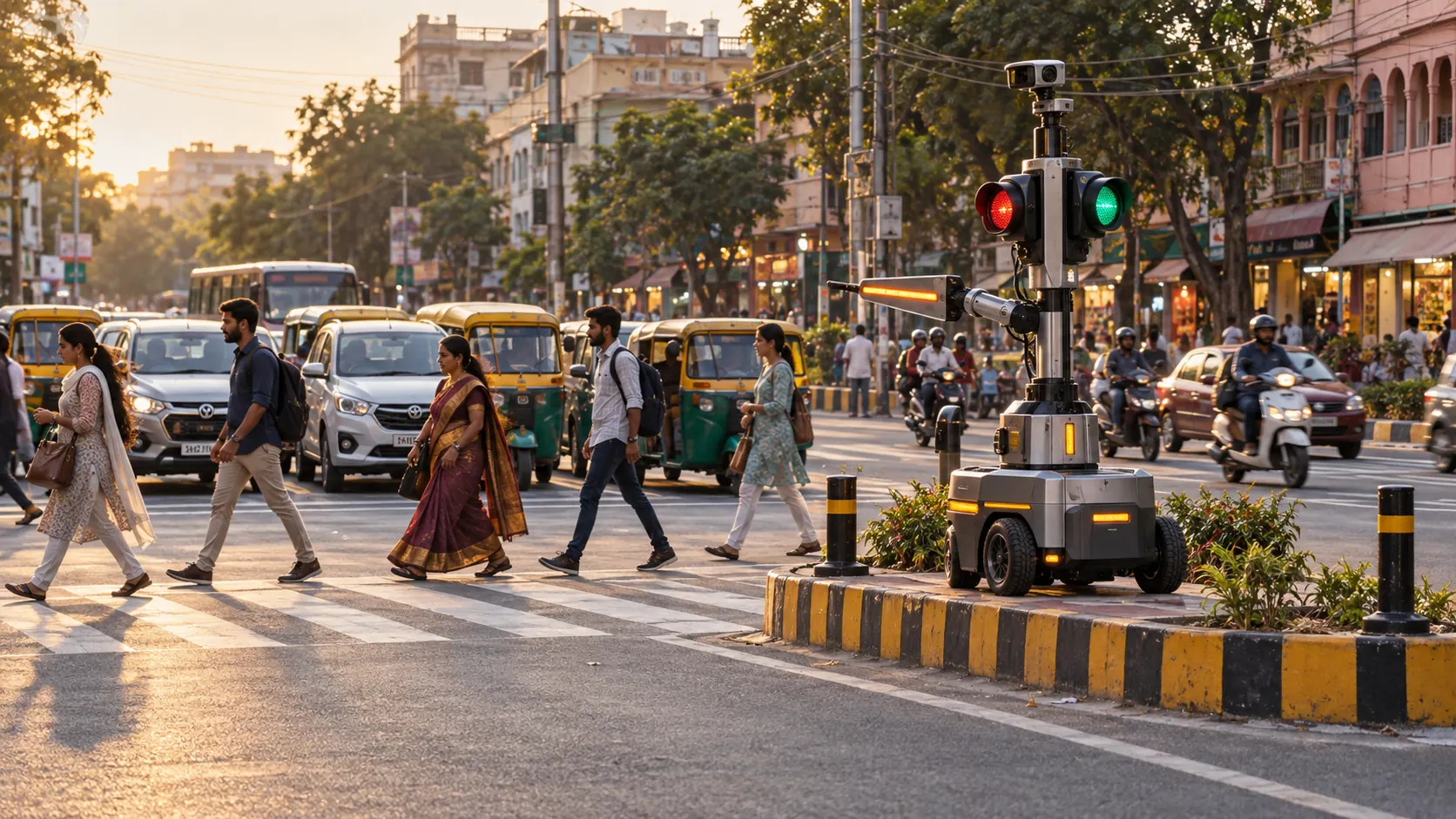
Traffic management · India
Buses, scooters, auto-rickshaws, and pedestrians share the same junction. Traffic changes moment by moment, and keeping it orderly means making room for everyone.
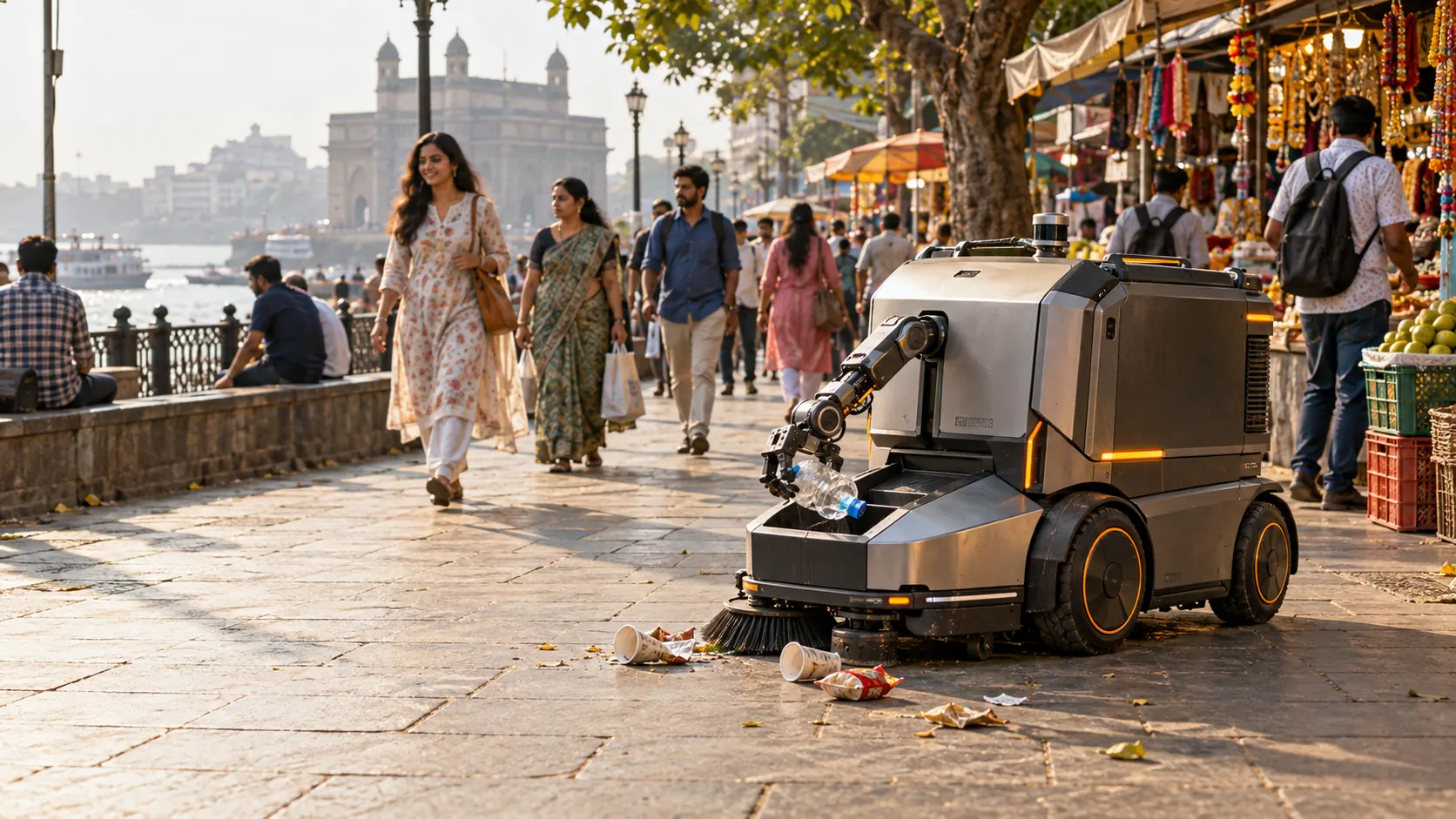
Garbage collection
Litter accumulates while markets and public spaces stay busy. Keeping them clean means reaching discarded waste without getting in the way of the people using them.
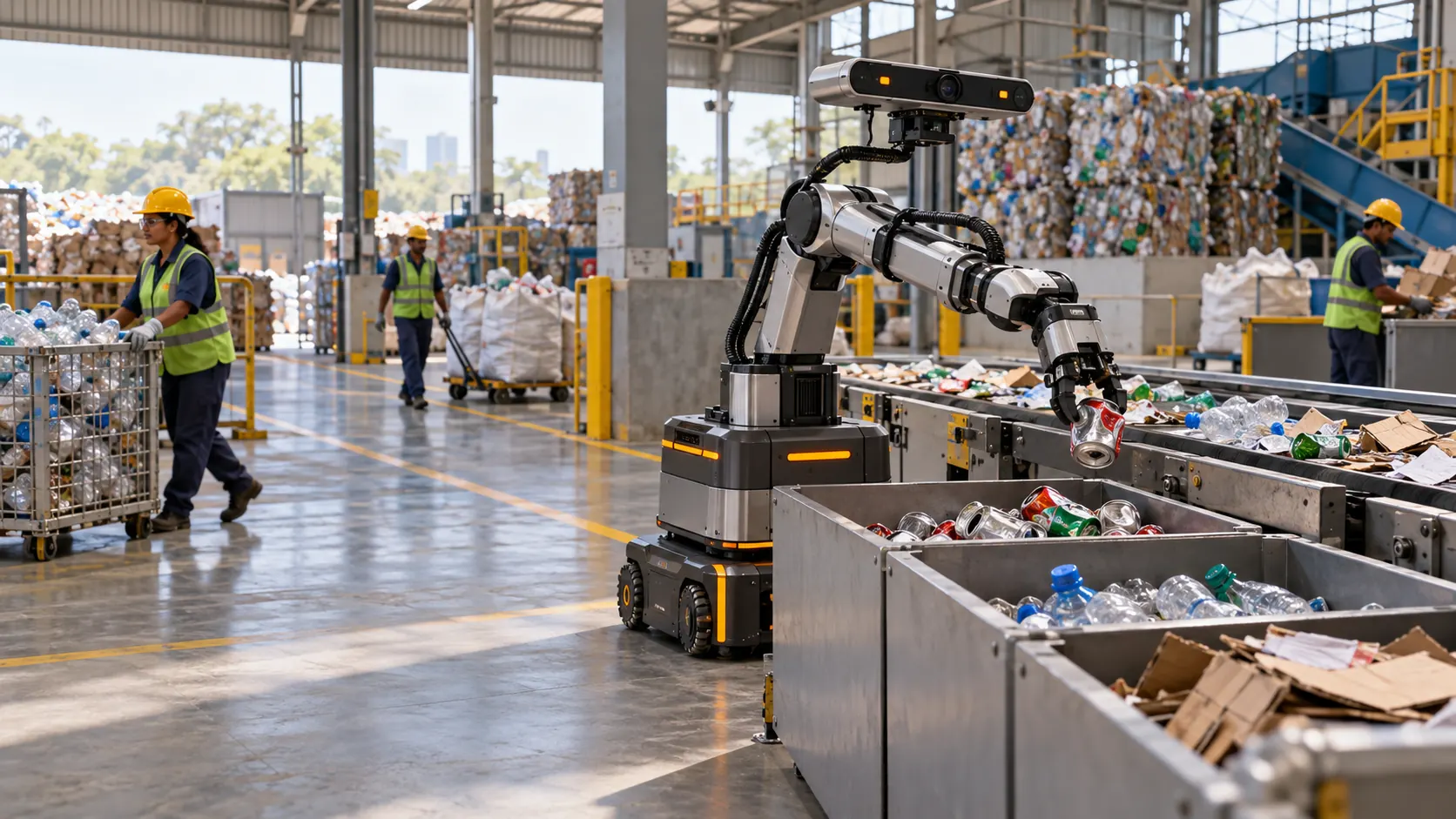
Waste sorting
Plastic, metal, and cardboard arrive together in changing shapes and conditions. Recovering useful materials requires careful separation within an active working environment.
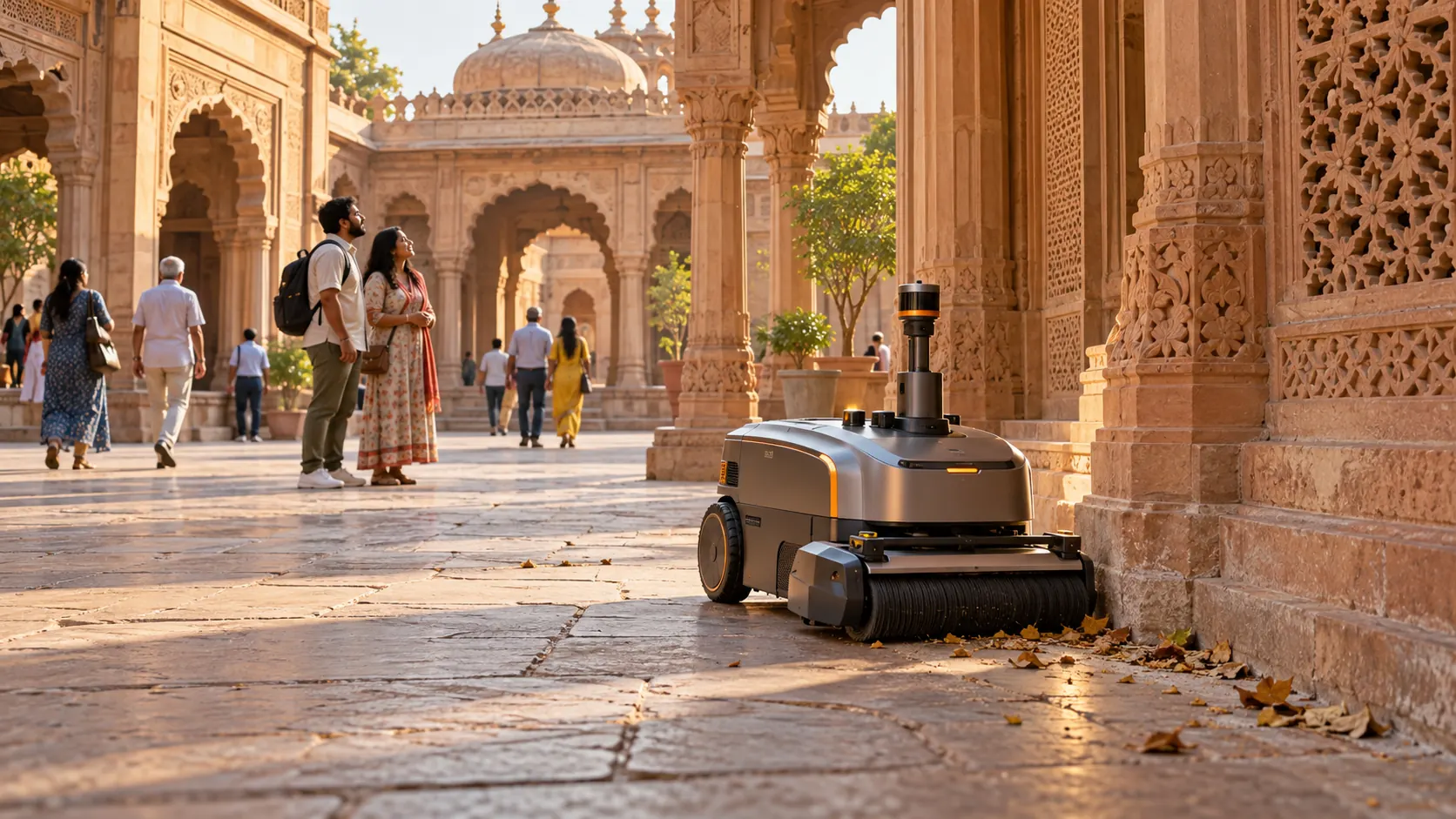
Architectural-site care
Dust, leaves, and footfall are part of a living architectural site. Cleaning must respect aged surfaces and the visitors moving through courtyards and narrow passages.
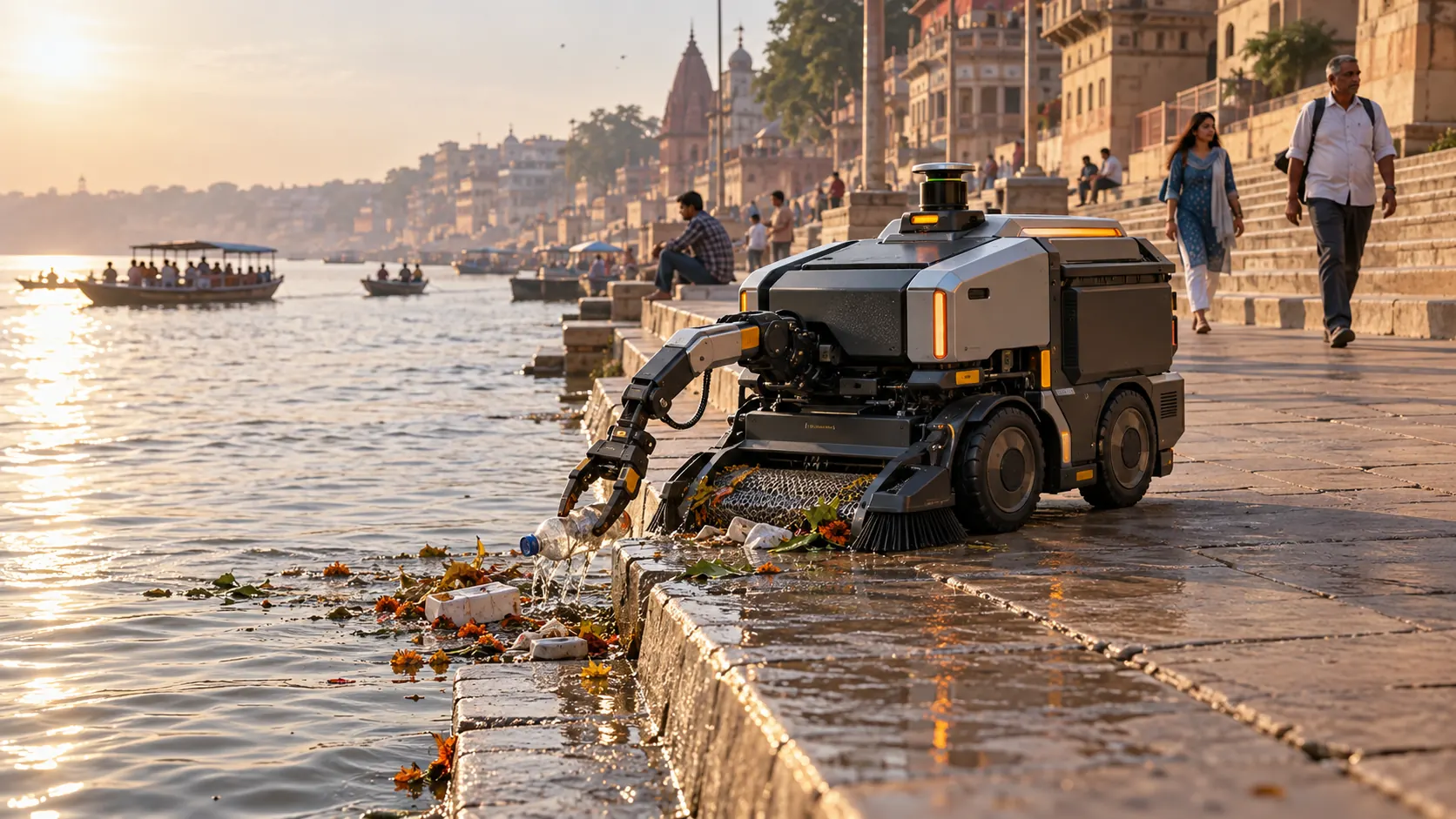
Riverbank cleanup
Waste left along a riverbank can quickly reach the water. Prompt cleanup has to work around visitors, uneven steps, and a shoreline that is always changing.
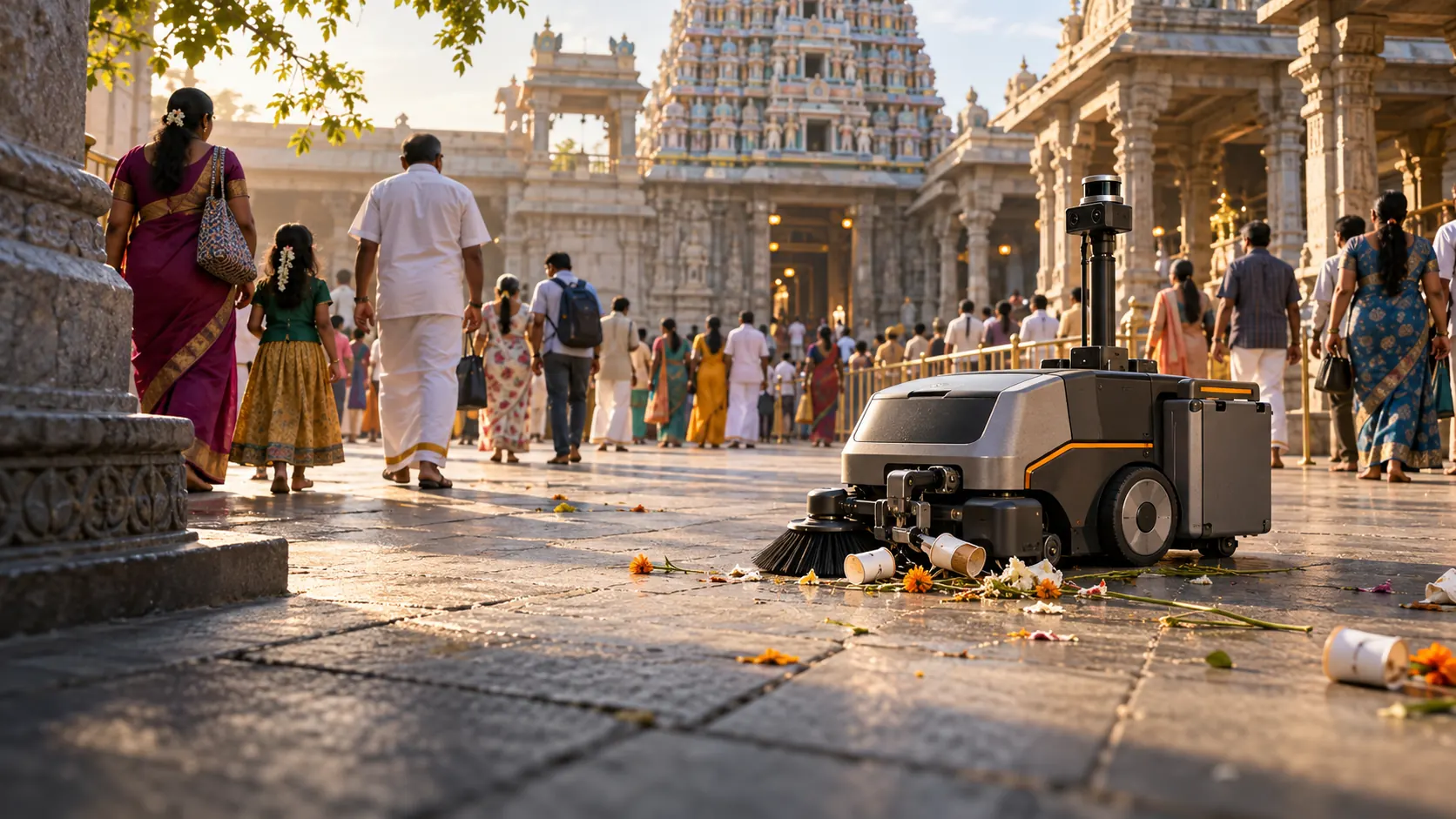
Religious-site care
Busy religious sites need care throughout the day. Visitor walkways must stay clean while respecting worship, personal space, and the movement of people.
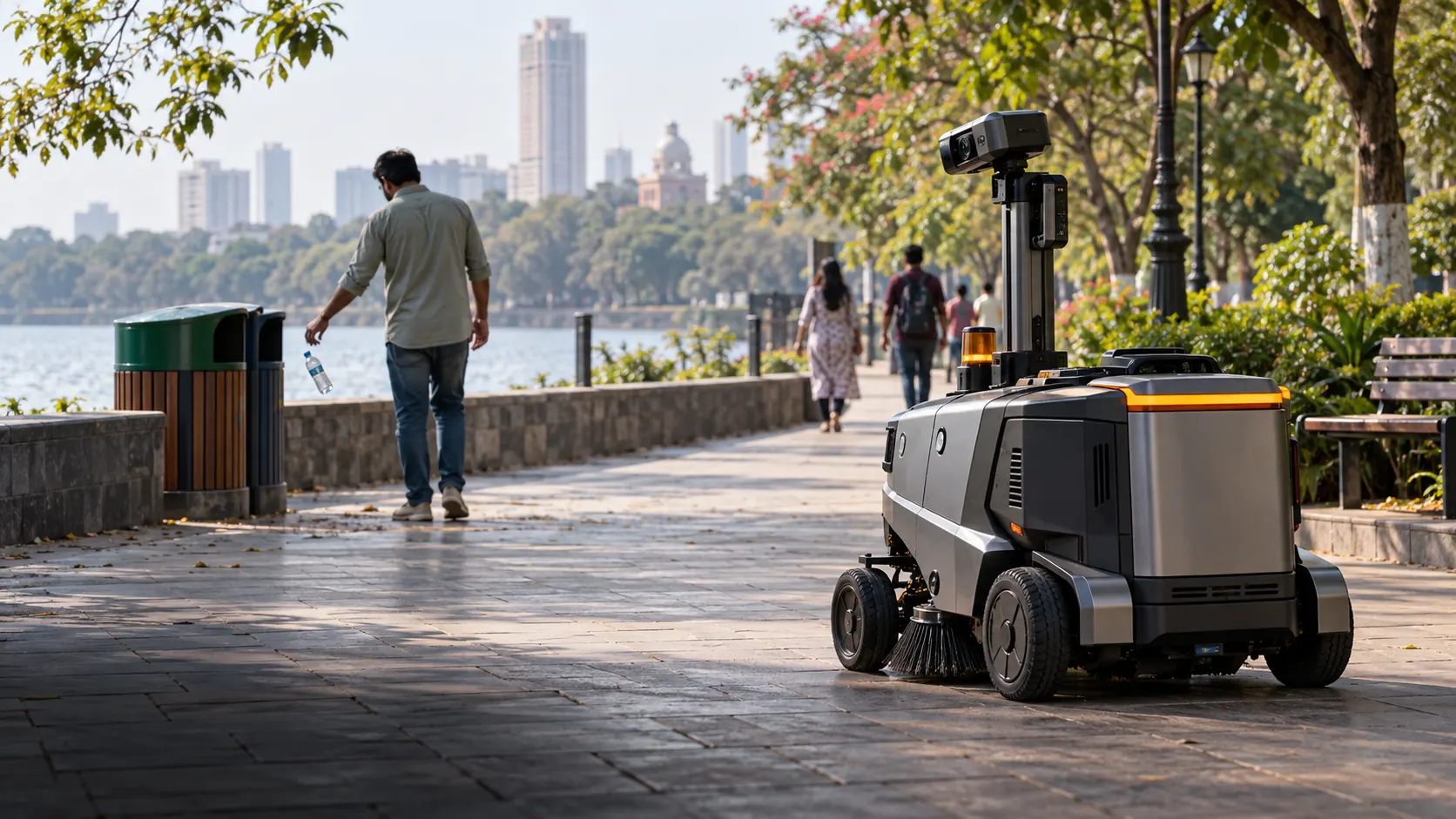
Littering-incident recording
Waste can return to the same place after every cleanup. Documenting littering incidents helps site teams understand where and when the problem repeats, alongside clearing what is left behind.
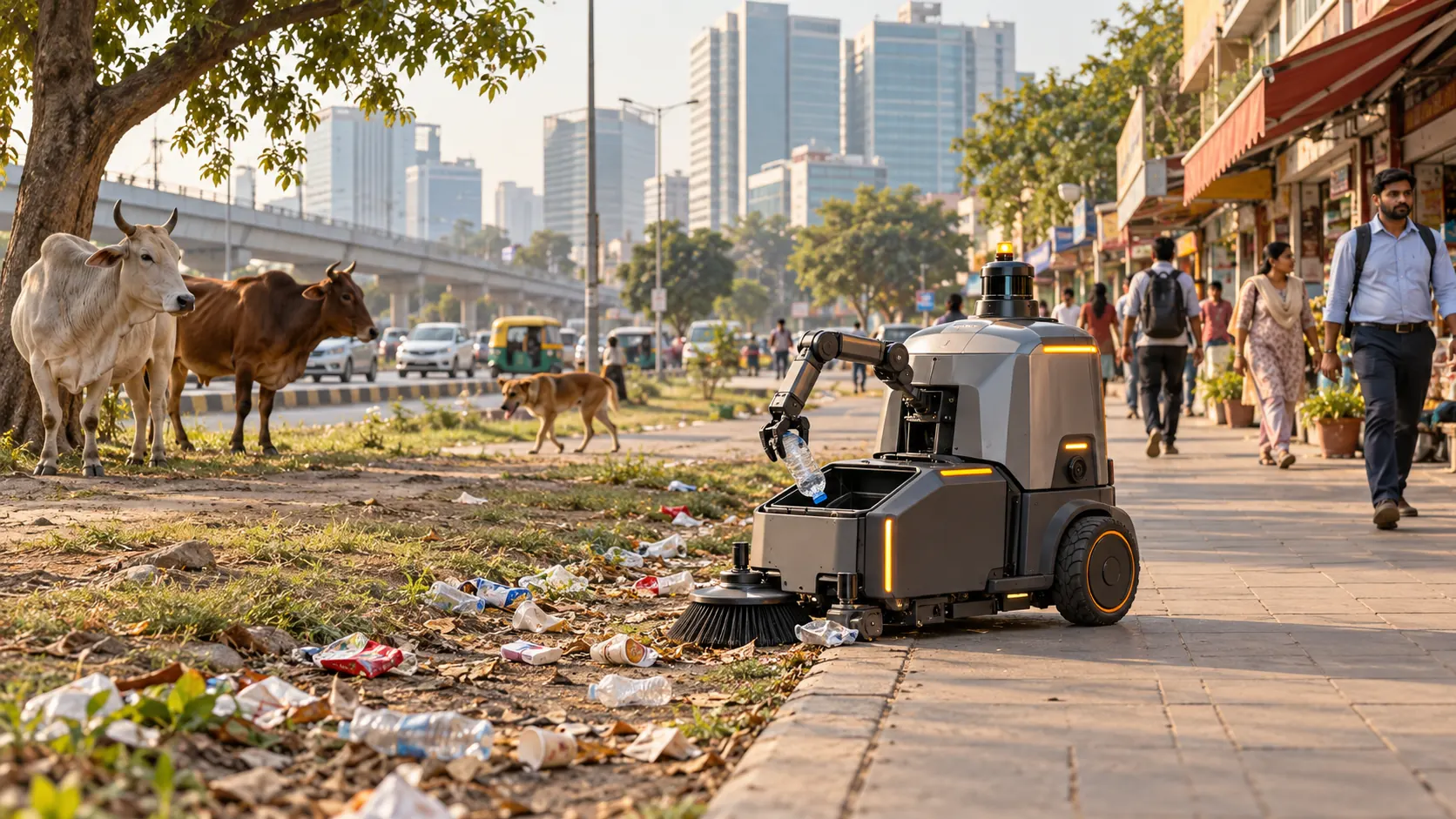
Roadside cleanup
Roadside waste collects in spaces used by pedestrians, stray cattle, and dogs. Cleanup needs to distinguish discarded material from living beings and adapt as they move.
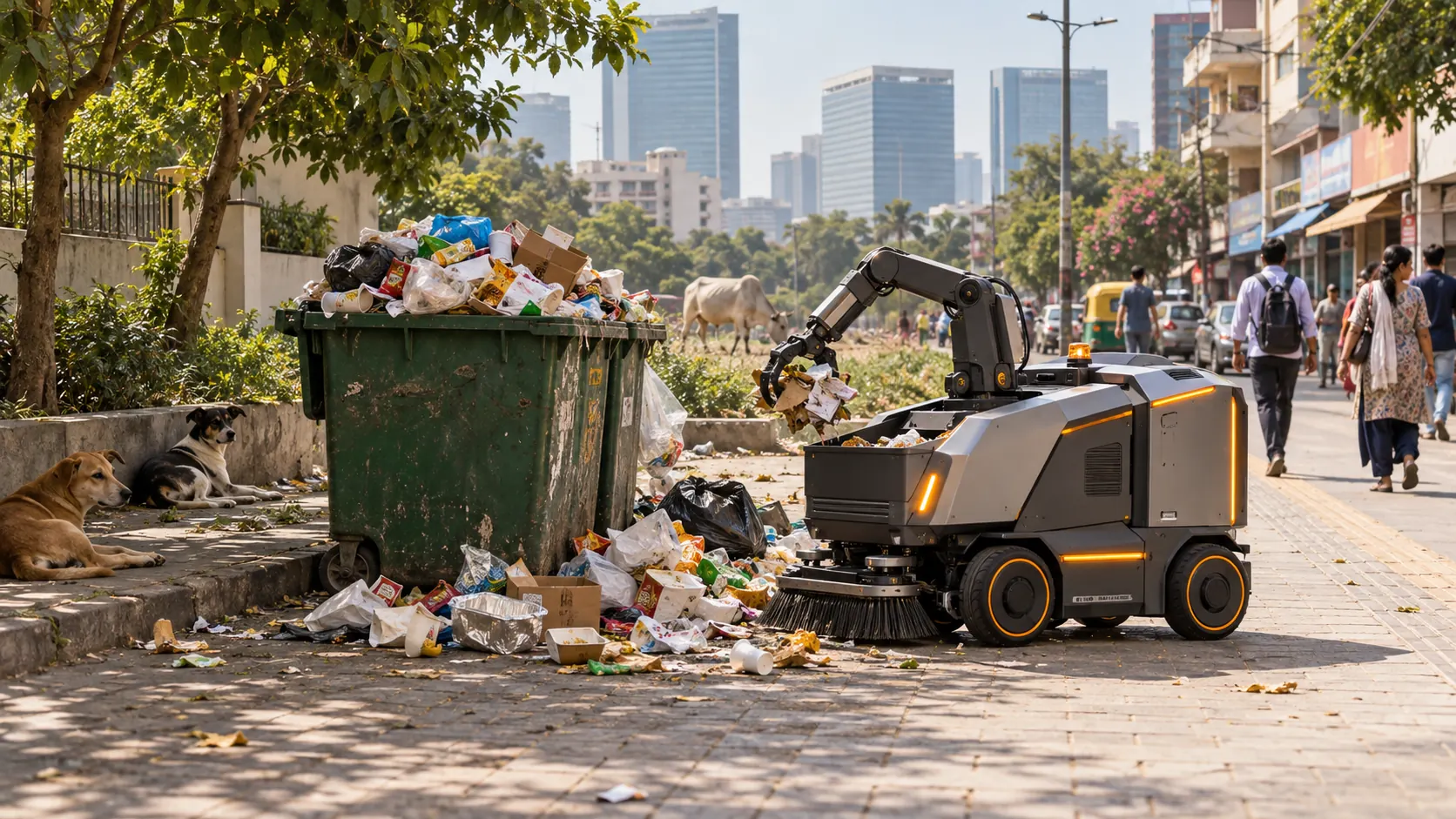
Neighborhood waste
Overflowing collection points spread loose waste into neighborhood streets. Removing it means working around residents and animals without blocking their way.
THE ENGINEERING BEHIND THE MISSION
Real intelligence does work that matters to humanity.
We’re building robots to understand the world in four dimensions: three-dimensional space and how it changes over time. Our aim is to turn perception into understanding quickly enough to anticipate movement, recognize emerging hazards, and adapt as events unfold.
That intelligence must work alongside us—reading human movement, understanding instructions, and coordinating with people in shared spaces. It must also recognize uncertainty and know when to ask for help. The purpose is practical: protect lives, restore our environment, and carry out essential work in places that challenge us most.
Hardware, sensors, and mobility designed around the job—from confined pipes to crowded streets and extreme terrain.
Models that connect space, motion, and human intent to decisions, continually adapting as the world changes.
Test against real conditions, human interaction, and failure scenarios—with clear limits, operator oversight, and measurable task performance.
HUMAN–ROBOT TEAMWORK
Where robots work with human experts, taking direction through words, gestures, and shared understanding.
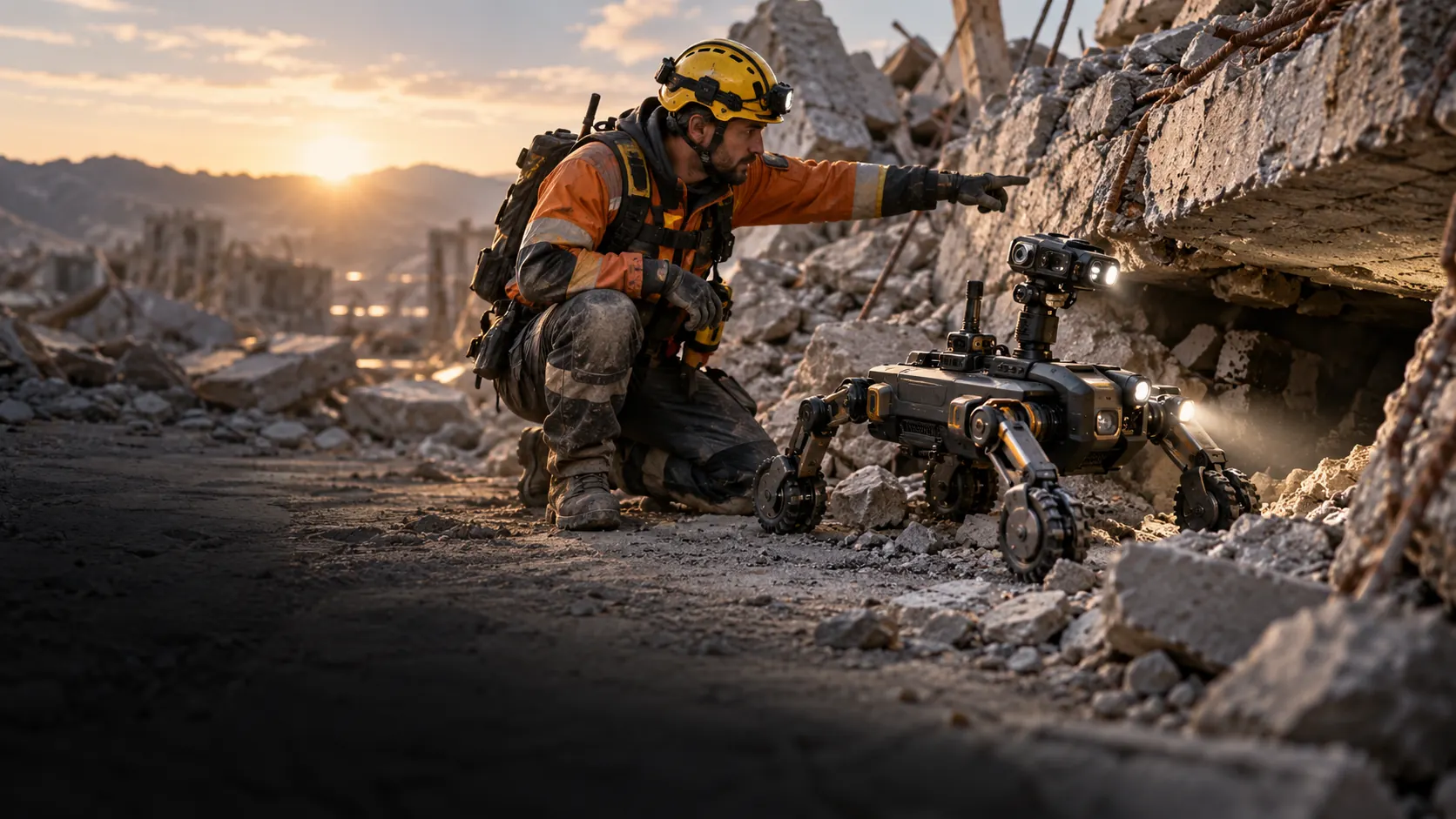
Search & rescue
A rescuer identifies the opening worth checking. Turning that direction into a careful search requires shared attention in a scene that keeps changing.
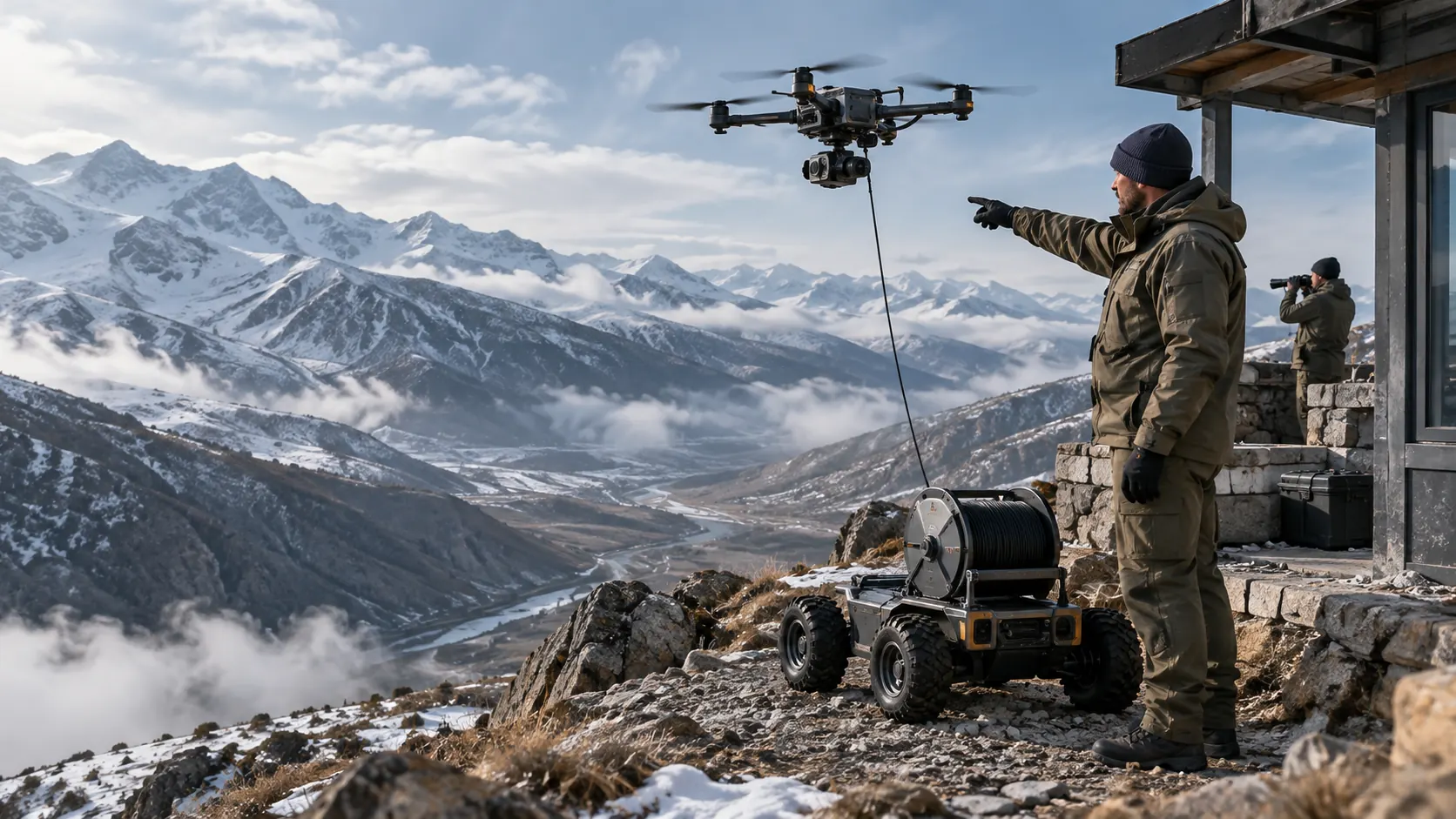
Border observation
Remote terrain can hide what a field team needs to assess. Human-directed aerial observation can extend the view while keeping interpretation with the people on the ground.
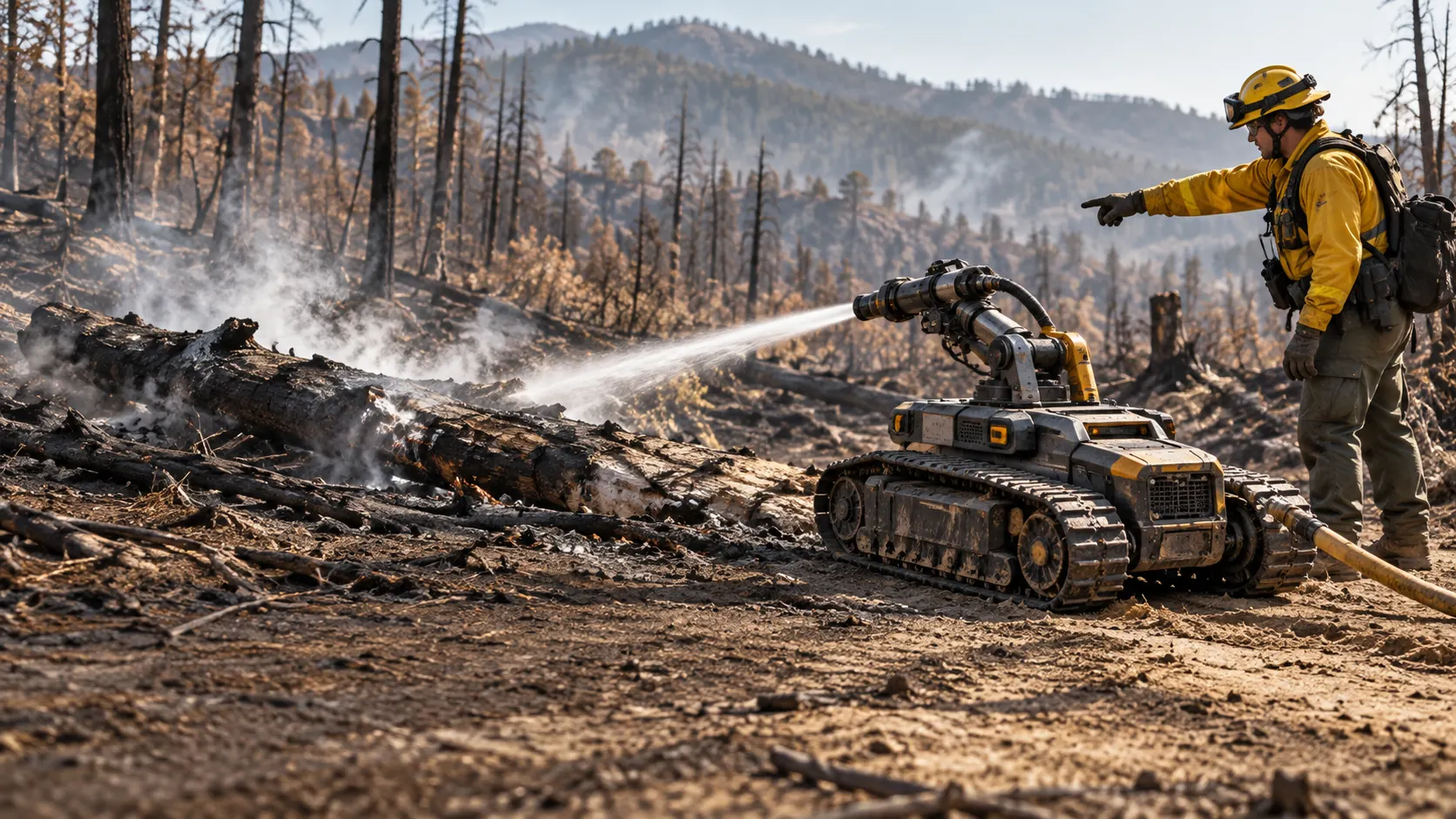
Wildfire response
Fire crews read the terrain and decide where attention is needed. Heat, smoke, and unstable footing make acting on those decisions difficult at close range.
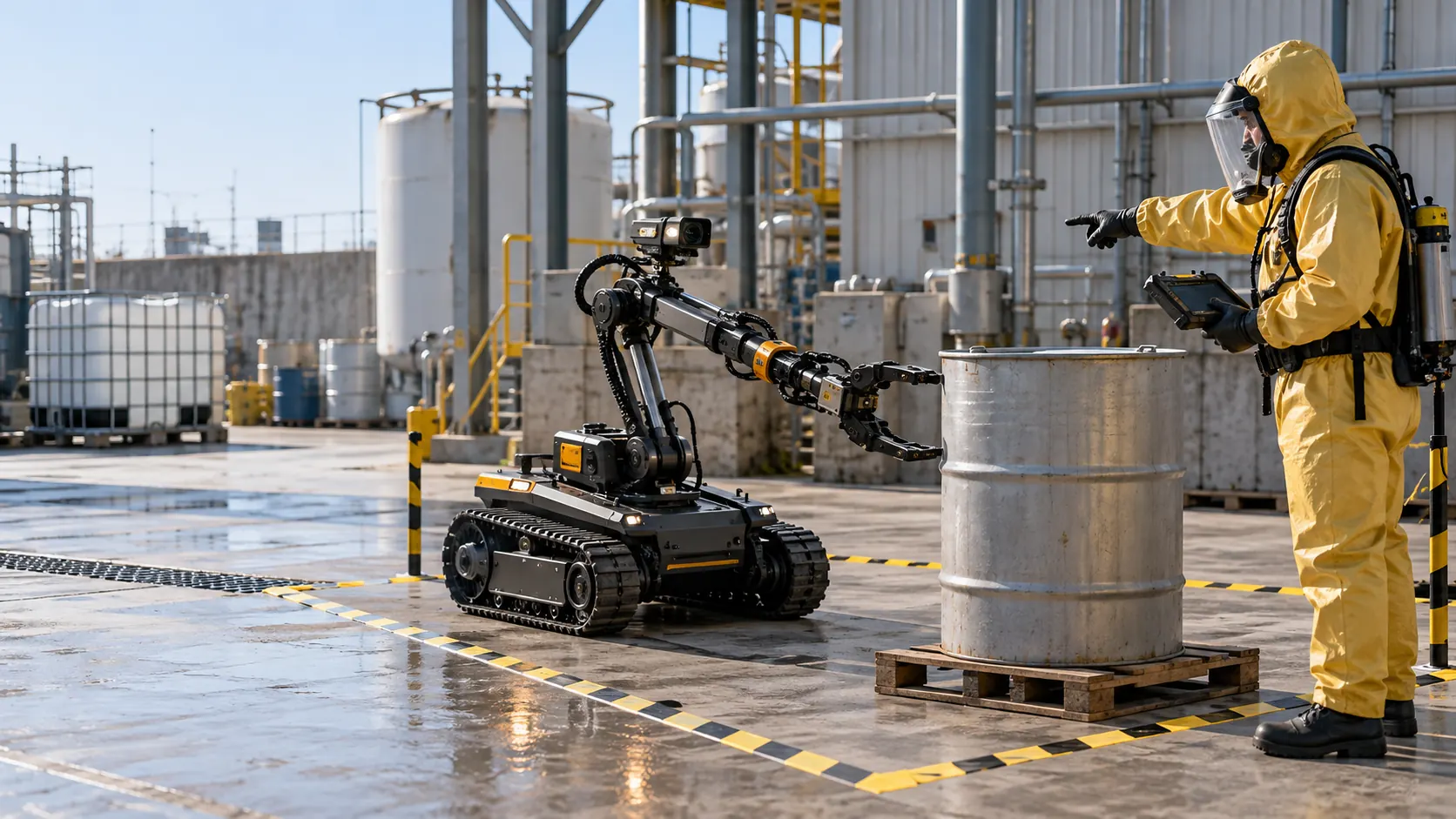
Hazardous-material handling
An expert can identify what needs moving without needing to touch it. Precise instructions and clear feedback matter when an object may be hazardous.
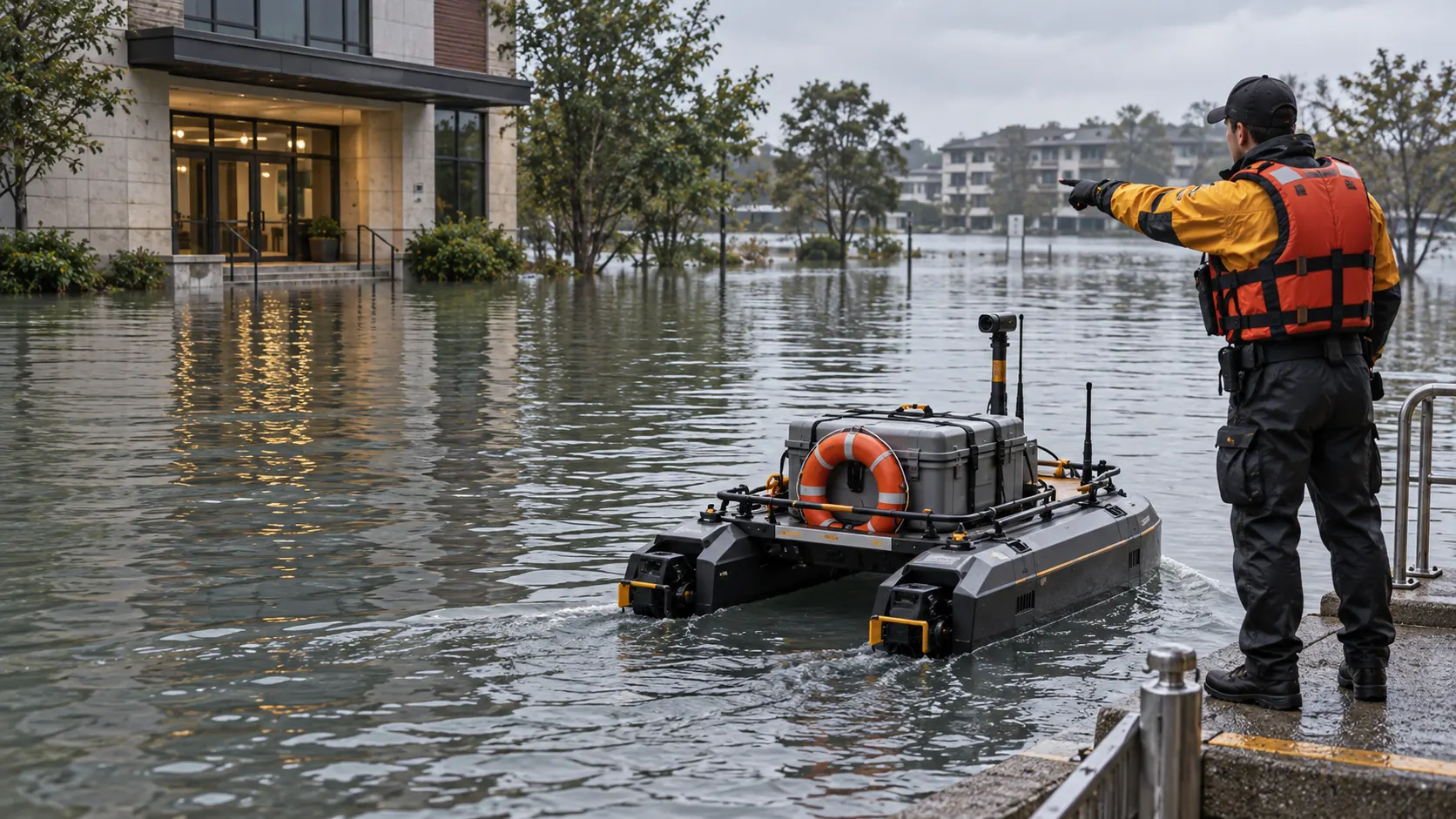
Flood-response logistics
Floodwater can cut off an ordinary route in hours. Responders need to direct supplies toward reachable locations as access and local needs change.
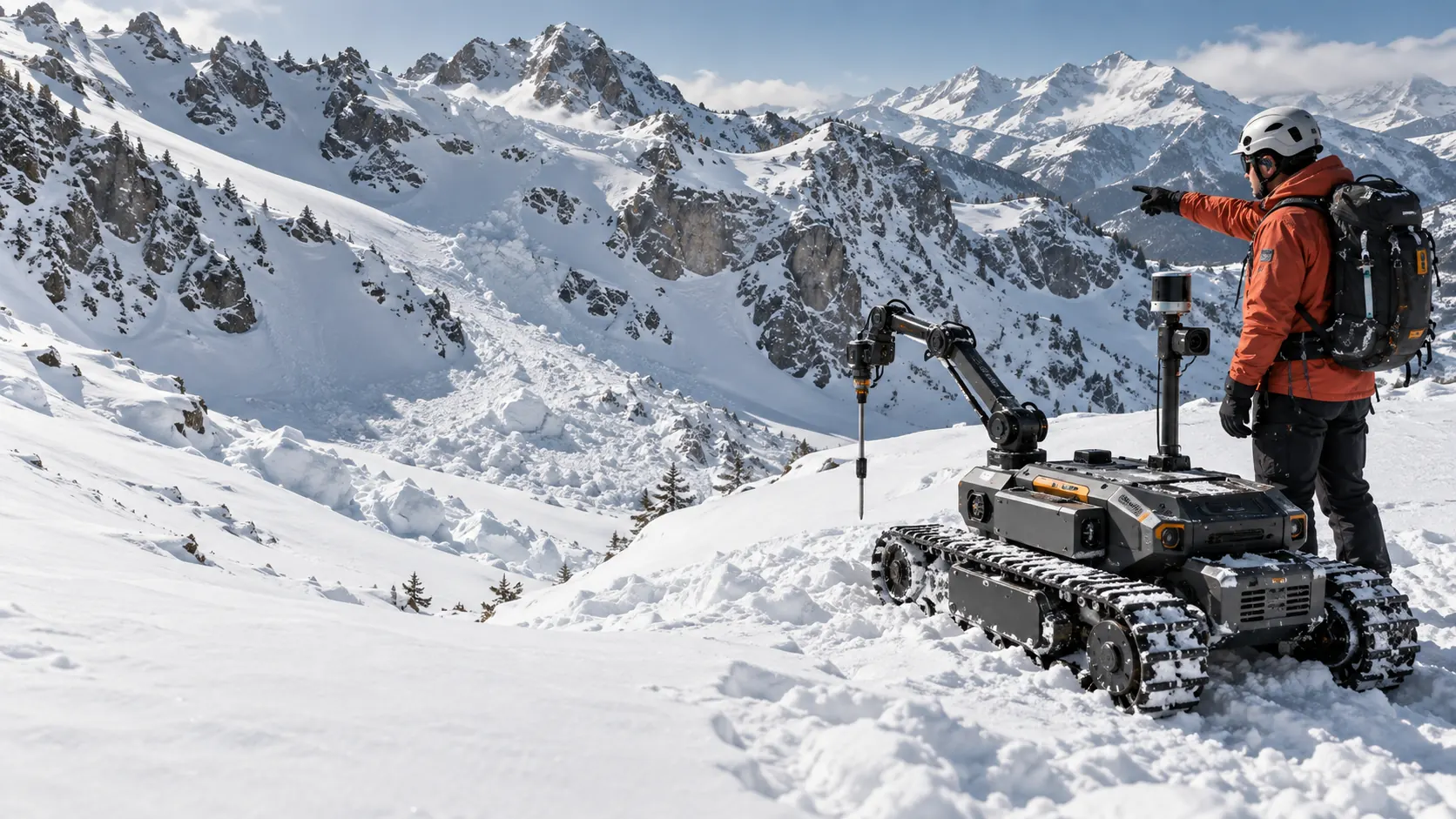
Avalanche search
Experienced teams choose where to investigate in difficult snow conditions. Carrying out that search requires precise coordination across cold, uncertain ground.
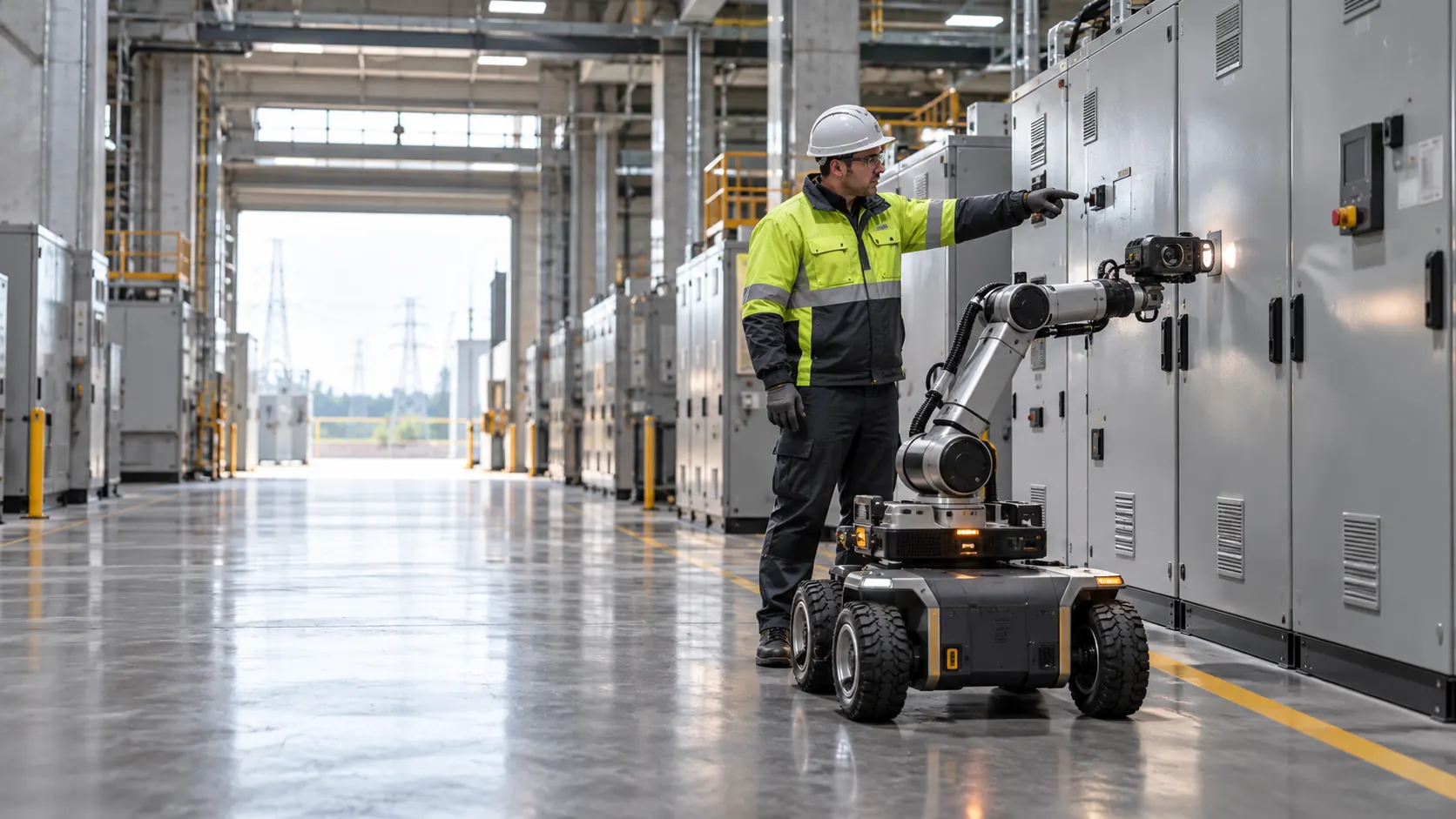
Electrical infrastructure
An engineer’s knowledge can narrow a fault to a specific component. Reaching the right inspection point requires turning that expertise into precise action.
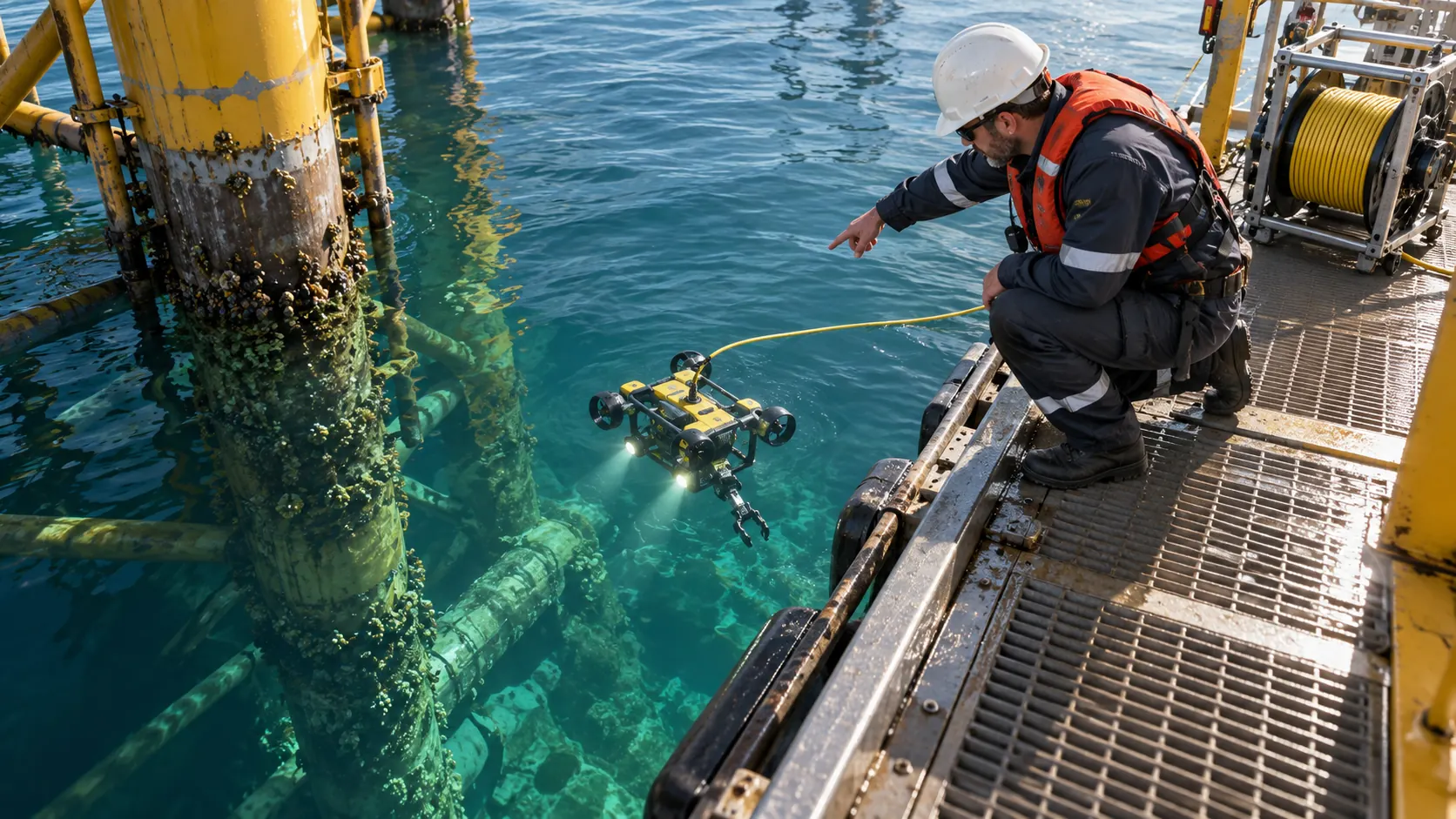
Offshore inspection
Marine teams know which underwater structures need attention. Depth, visibility, and access make it difficult to translate that knowledge into a close inspection.
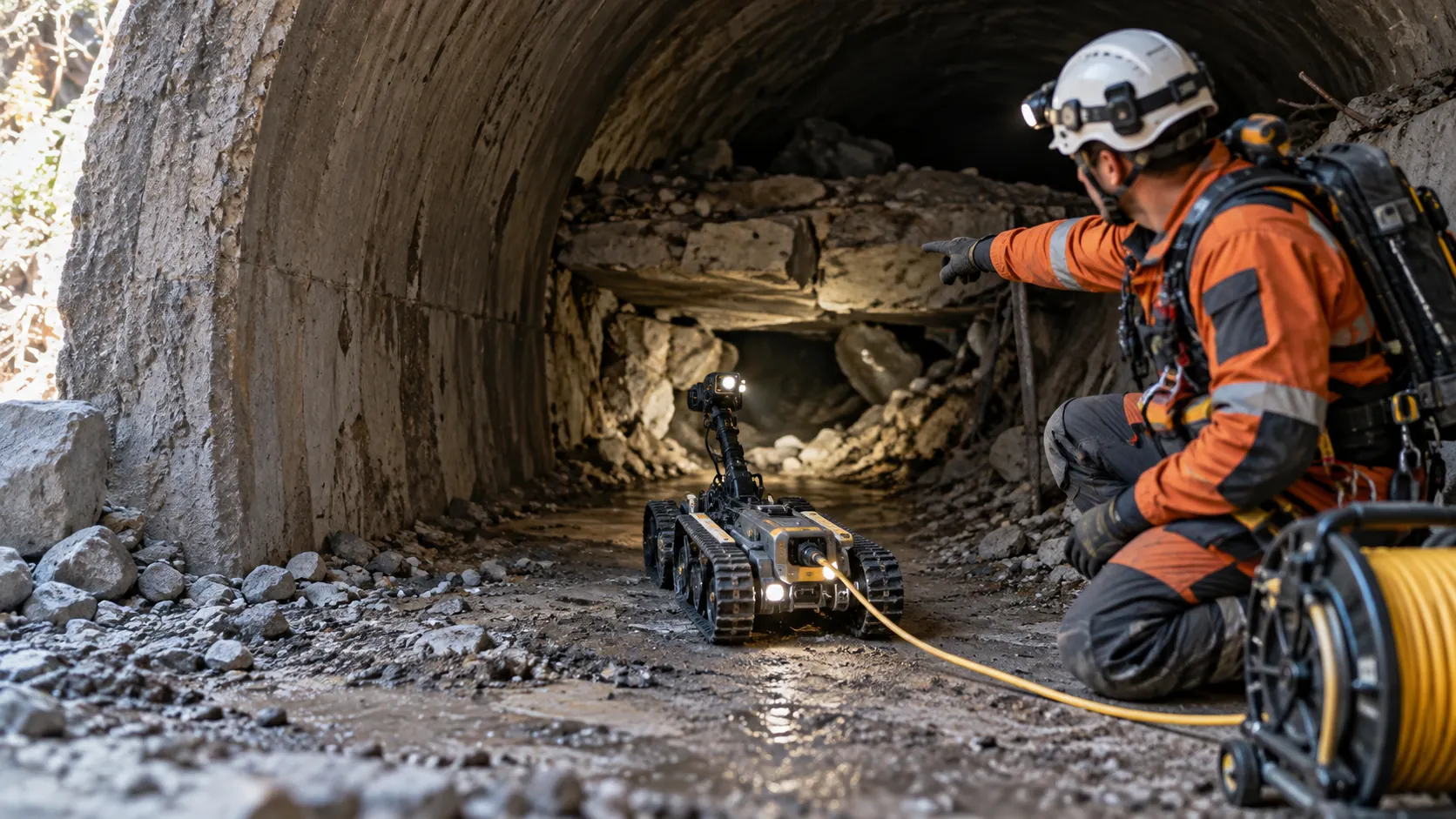
Tunnel emergencies
An opening may be too uncertain for a person to enter. A specialist needs a way to direct an initial inspection and revise the plan as information comes back.
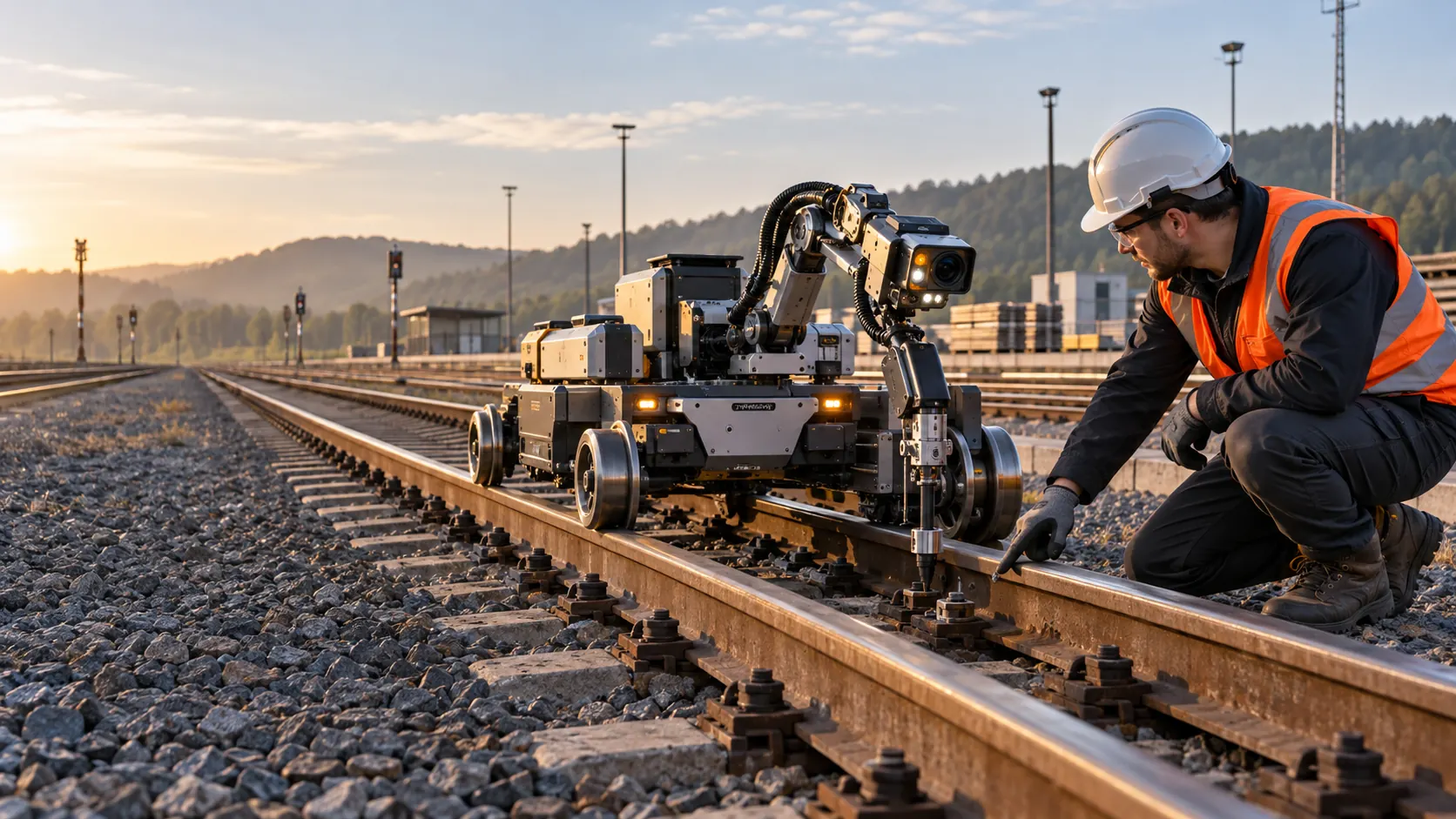
Railway maintenance
Rail maintenance brings detailed local knowledge into short work windows. Inspection and repair depend on accurately identifying the joint, component, and task.
ABOUT US
Our leaders hold PhDs in robotics, artificial intelligence, and mathematical optimization, with backgrounds at Carnegie Mellon University’s Robotics Institute and Virginia Tech.
Our engineering team brings together talent from the Indian Institutes of Technology (IITs) and Indian Institutes of Information Technology (IIITs).
ENGINEERING & CONSULTING
Robotics and AI talent is scarce. You may have a mission that matters to humanity—and the resources to pursue it—but need the technical expertise to bring it to life.
Bring that mission to us. Our team will work with you to define the technical path, develop the intelligence, and build and validate the system—from an ambitious idea to a practical application.
Build your mission with us ↗Turn your application into a clear AI strategy and working models. We help with perception, autonomy, computer vision, and LLMs—from data and annotation to training and integration.
Find out where your system works, where it fails, and what needs to improve. We build evaluations, simulations, and field-test plans around real tasks, human interaction, and challenging conditions.
Tell us about the place, the task, and the people it could help.
Let’s talk ↗info@vistree.aiUnitech Business Zone, Sec 50